Brochure Website vs Ecommerce Store: How to Choose the Right One
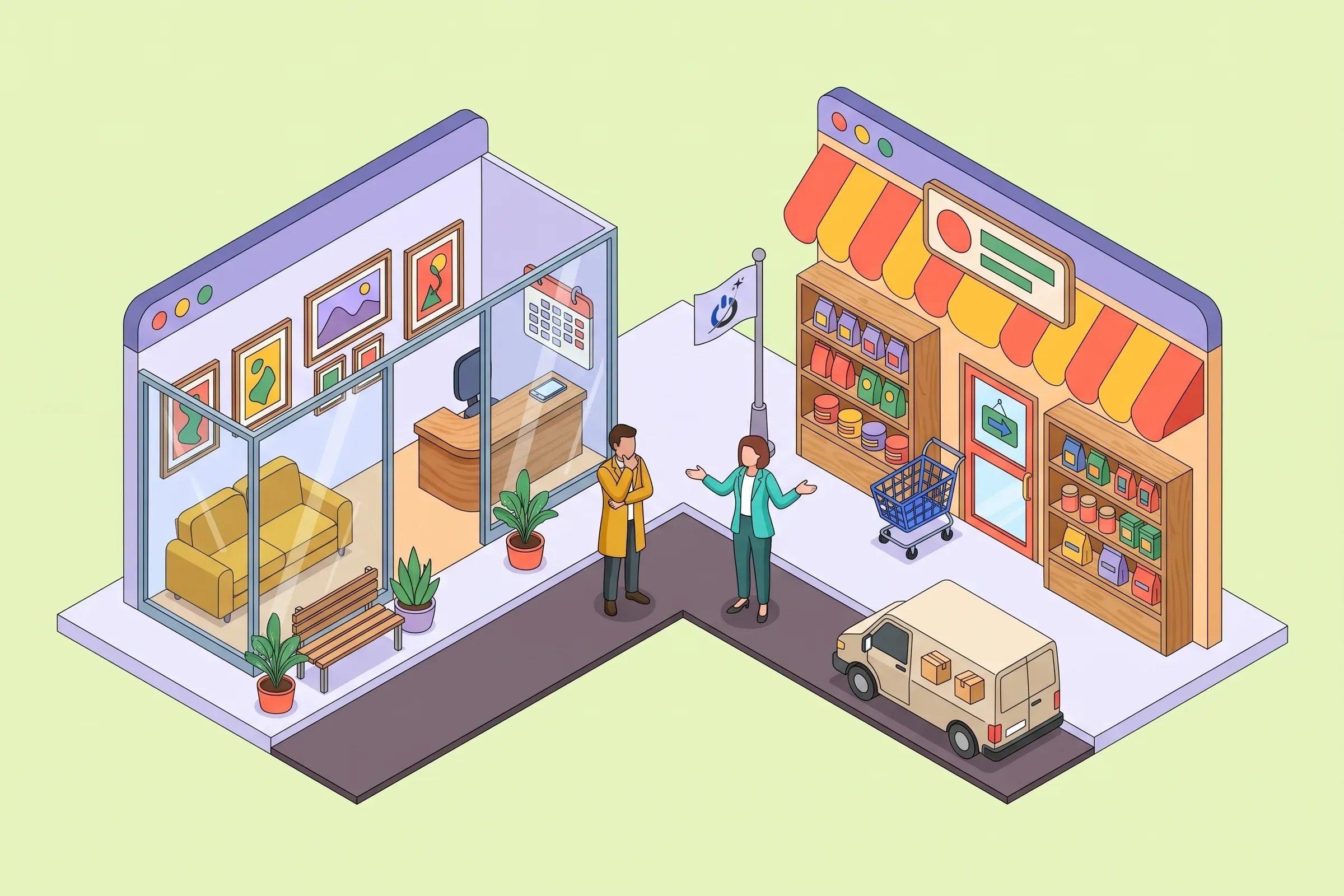
This comparison helps you choose between a brochure website vs ecommerce store, and more precisely between an advanced brochure website and a small ecommerce store of 10 to 50 products: features, build and running costs, SEO, logistics, return on investment, typical cases, and the signs that it is time to switch from one to the other. A decision tool gives you a first answer in one minute.
At a glance
- Brochure website vs ecommerce: a brochure site presents an offer and generates leads, an ecommerce site sells directly online.
- A small ecommerce store (10 to 50 products) suits standard products with fixed prices that are easy to ship.
- An advanced brochure website suits services, quote-based sales and highly customized products.
- Ecommerce costs more to build and to run: payments, stock, shipping, after-sales service.
- You can start with a brochure site and add a store later, as long as you pick the right platform from the start.
Brochure website vs small ecommerce store: definitions and stakes
A brochure website presents a business, its services or products, and drives visitors to get in touch: form, call, booking, quote request. There is no cart and no payment. An “advanced” brochure site goes further: detailed service pages, proof (reviews, case studies), a blog, booking tools, conversion tracking.
A small ecommerce store is a lightweight online shop: a short catalog (10 to 50 items), a cart, online payment, stock and shipping management. It is the ideal format to test online sales or sell a short range without the weight of a large store.
So the real question is not technical. It is commercial: does your customer buy directly, or do they need to talk to you before committing?
Key feature comparison
| Criterion | Advanced brochure website | Small ecommerce store (10-50 products) |
|---|---|---|
| Goal | generate leads and quote requests | sell directly online |
| Online payment | no | yes |
| Stock and shipping management | none | to organize |
| Build time | shorter | longer |
| Running costs | low | higher (payment fees, apps, logistics) |
| SEO | service pages, local, expert content | product pages, categories, long tail |
| Best for | services, custom work, B2B, consultative sales | standard products, fixed prices, small baskets |
Essential features of an advanced brochure website
- Clear service pages, with benefits, indicative prices or ranges, FAQs and calls to action.
- Well-designed forms, online booking, chat or a messaging link depending on your audience.
- Social proof: case studies, customer reviews, certifications, client logos.
- A blog or resources for SEO and trust.
- Conversion tracking (forms, calls, clicks) in Google Analytics 4.
Features of a small ecommerce store (10 to 50 products)
- Complete product pages: photos, variants, description, reviews, availability.
- Cart, card and mobile wallet payments, invoices, VAT or sales tax handling.
- Shipping options (home, pickup point, collection), clear costs and delivery times.
- Transactional emails: confirmation, shipping, returns.
- Promo codes, bundles, related products.
Technical watch points
In both cases, speed and Core Web Vitals matter for SEO and conversion. Ecommerce adds requirements: payment security, customer data protection, terms of sale, withdrawal rights, price and shipping disclosures. Think about the next step too: going from 50 to 300 products, selling in several countries or opening a trade area should remain possible without starting over.
Costs: build, maintenance and scalability
| Item | Advanced brochure website | Small ecommerce store |
|---|---|---|
| Build (design, development, content) | around €2,500 to €9,000 | around €5,300 to €18,000 |
| Hosting and maintenance | around €50 to €250 / month | around €100 to €400 / month |
| Apps and plugins | around €10 to €100 / month | around €20 to €150 / month |
| Payment fees | none | around 1.2 to 2.9% + €0.25 per transaction |
| Logistics | none | picking, packing, shipping, returns |
| Time spent | handling leads | orders, stock, customer service |
These ranges vary by country, platform (WordPress, WooCommerce, Shopify, PrestaShop), content to produce and integrations. The most underestimated item is not the build but day-to-day running: subscription, apps, payment fees, product photos, time spent handling orders.
SEO: how your choice affects acquisition
SEO for a brochure website
A brochure site ranks on service and local queries: “plumber Toronto”, “accountant for contractors”, “marketing agency London”. Its strengths: solid service pages, local pages if you cover several cities, expert content and a well-kept Google Business Profile.
SEO for a small ecommerce store
A store targets product queries, often more specific: model, material, use, size. Its strengths: unique product pages (not the supplier’s description), categories with a useful introduction, customer reviews and Product structured data. There are more pages, and more SEO upkeep. Our guide to building an online store covers the essentials.
Shared strategies
Speed, a clear structure and internal linking help both. Track your results with the right ecommerce KPIs or lead metrics.
Logistics and operations: from click to customer
Brochure website: a cartless journey
Leads come in and need handling: quick replies, qualification, quotes, follow-ups. A simple CRM, automated replies and online booking often do more for revenue than a new page.
Small ecommerce store: stock, shipping, after-sales
Every order triggers a chain: picking, packing, shipping, tracking, possible returns, refunds and customer questions. Carriers and pickup networks differ from one country to another. Before choosing ecommerce, make sure you have the time and organization for this part, or a fulfillment partner.
Does a brochure website look like enough to get started? Discover our website design services
ROI: framing the investment
The calculation differs between the two models:
- Brochure website: leads per month × close rate × average customer value, minus website and acquisition costs.
- Small ecommerce store: visits × conversion rate × average order value × margin, minus platform, payment fees, logistics and marketing.
Run the numbers with your own figures, even rough ones. They often show that with a low average order value, fixed costs and shipping eat the margin, and that with a high-value service, a few qualified leads a month are enough to pay for a brochure site. Our guide to the ecommerce conversion rate helps you estimate realistic figures.
Decision tables
Quick decision matrix
| Situation | Recommendation | Why |
|---|---|---|
| Under 10 items, price on request | advanced brochure website | consultative sale, needs explaining |
| 10 to 50 standard items, fixed prices | small ecommerce store | direct purchase possible, simple logistics |
| High average ticket, negotiated sale | advanced brochure website | the customer wants to talk to someone |
| Small baskets, repeat purchases | small ecommerce store | volume and repeat buying |
| Customized products | brochure site + configurator or quote | price depends on the project |
| Fast launch, tight budget | brochure website | quicker to launch, fewer fixed costs |
Take the test
Typical cases: which site for which profile?
- B2B service company (consulting, IT, engineering): advanced brochure website, with service pages, case studies and booking. The sale closes through direct conversation.
- Maker or craftsperson with a short range (jewelry, cosmetics, decor): small ecommerce store, with rich product pages, pickup points and reviews.
- Custom workshop (joinery, kitchens, printing): brochure website with a configurator or detailed quote form, since the price depends on the project.
- B2B wholesaler or manufacturer: catalog without payment, price on request and a trade area, starting as a brochure site.
- Coach, trainer, consultant: brochure website with online booking and payment for sessions; a “small ecommerce” of services, without logistics.
Quick checklist to choose with confidence
- Can your customers buy without talking to you?
- Are your prices fixed and publishable?
- Are your products easy to ship and return?
- Do you have time to manage orders, stock and after-sales service?
- Can your margin absorb payment, packaging and shipping costs?
Three “yes” answers or more: a small ecommerce store is worth considering. Otherwise, start with a solid brochure website.
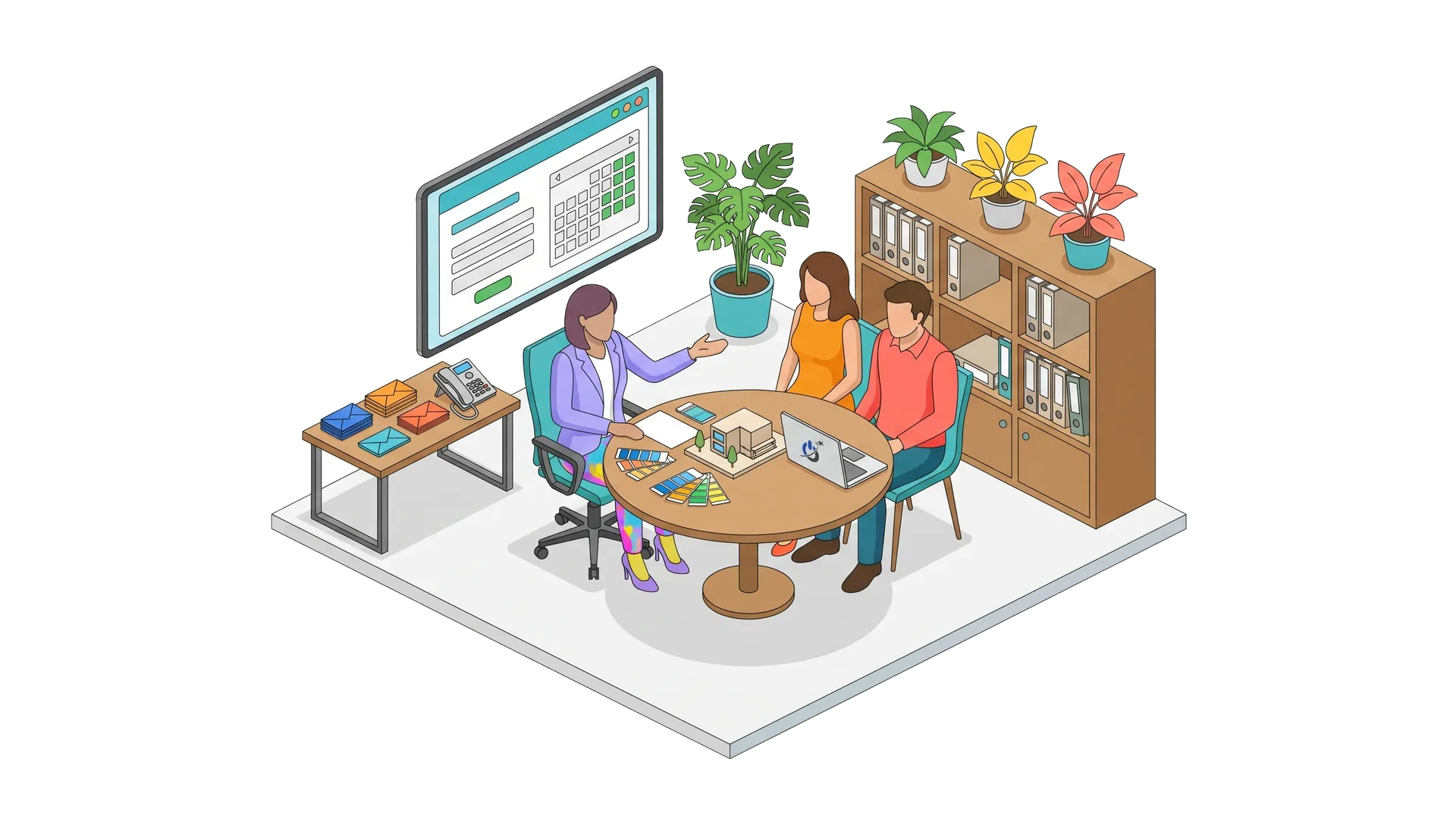
When to switch from brochure site to ecommerce (or back)
Signs it is time for ecommerce: customers regularly asking to order online, quotes that always cover the same standard products, a stable range with fixed prices. Conversely, a store where most sales actually happen by phone or quote would be better off as a brochure website, simpler and cheaper.
Either way, plan the switch: choose a platform from the start that can add a store (WordPress with WooCommerce, for example), keep the URLs of pages that rank, and plan redirects.
For a real example of a Canadian online store that mixes direct checkout and quote requests, see our Shopify store in Canada case study.
Conclusion
Brochure website vs ecommerce: the right choice follows from how you sell. If your customers need advice, reassurance or a quote, an advanced brochure website will bring them to you. If you sell a short range of standard products at fixed prices that are easy to ship, a small ecommerce store opens up direct sales. Our advice: start with the simplest option that fits your model, on a platform that lets you grow, and let the numbers decide the next step.
Frequently asked questions about brochure websites and small ecommerce stores
What is the difference between a brochure website and an ecommerce website?
A brochure website presents your business and aims for contact: form, call, booking or quote. An ecommerce website lets people buy directly online, with a cart, payment, stock and shipping management. The first generates leads, the second orders.
What is a small ecommerce store?
It is a lightweight online shop with a short catalog (usually 10 to 50 products), online payment and simple stock and shipping management. It suits testing online sales or selling a narrow range, without the complexity of a large store.
How do you know whether you need a brochure website or an online store?
Ask whether customers can buy without talking to you, whether your prices are fixed and whether your products ship easily. If so, a store makes sense. If selling involves advice, a quote or customization, an advanced brochure website is a better fit.
Which platform should you use for a small ecommerce store?
For a small store, WooCommerce (on WordPress) and Shopify are the most common. WooCommerce offers more freedom and fits well with a content site; Shopify is simpler to manage but relies on a subscription and paid apps. PrestaShop suits a catalog that needs to grow quickly.
Is a brochure website easier to rank than an ecommerce site?
It is easier to maintain, with fewer pages, but not necessarily easier to rank: it all depends on competition for your queries. An ecommerce site can capture many specific product searches, as long as its product and category pages are unique and well crafted.
Can you turn a brochure website into an online store later?
Yes, especially if the site is built on a platform that allows it, such as WordPress with WooCommerce. You then add the catalog, payment, shipping and terms of sale, while keeping existing URLs so you do not lose your rankings.