Phygital: Definition, Examples and How to Blend Physical Stores and Ecommerce

This guide explains what phygital is, which technologies it uses, what a phygital store looks like, what retailers gain from it and how to go phygital in practice, even with a single store. It includes retail examples, a technology table, a six-step method and a test to gauge your store’s maturity.
At a glance
- Phygital blends physical stores and digital tools into a seamless shopping journey across web, mobile and store.
- A phygital store uses tools such as click and collect, kiosks, electronic labels, mobile payment or augmented reality.
- The goal is not technology for its own sake, but a simpler, more personal and more profitable journey.
- The foundation is the same everywhere: synchronized stock, unified customer data and trained staff.
- A small shop can start simply: stock online, in-store pickup, a Google listing and contactless payment.
Phygital: definition
The word phygital blends “physical” and “digital”. It describes a strategy that combines the strengths of a store (contact, trying products, advice, instant purchase) with those of digital (information, choice, personalization, speed) in an unbroken journey. It is also called unified commerce or phygital retail. The term goes beyond retail: it appears in real estate, banking, trade shows and events, wherever a physical experience is enriched by digital tools.
The difference with omnichannel is subtle: omnichannel unifies all sales and communication channels; phygital focuses on blending physical and digital in the same moment, often inside the store itself.
Why phygital is taking over in 2026
Customers no longer distinguish between channels. They search online before visiting, compare prices on their phone in the aisle, order online to pick up in store, and return online purchases to a shop. A retailer that keeps silos (website stock on one side, store till on the other, separate loyalty) creates frustration: a product shown as available but nowhere to be found, an online-only promotion, a customer unknown from one channel to the next. Phygital answers these expectations. For a detailed comparison of both channels, read our guide on online store vs physical store.
The technologies of a phygital store
| Technology | What it brings | For which retailers |
|---|---|---|
| Click and collect, reservations | fast pickup, extra in-store purchases | all |
| POS connected to the website | shared stock, customers and loyalty | all |
| Mobile payment, mobile POS | less waiting, sell anywhere in the store | all |
| Kiosks and screens | full catalog, ordering items not on the shelf | mid-size to large stores |
| Electronic shelf labels | same prices online and in store | stores with many products |
| RFID | accurate stock, item location | fashion, large catalogs |
| Augmented reality, smart mirrors | virtual try-on, personalized advice | beauty, eyewear, furniture |
| Mobile app | loyalty, personalized offers, availability | brands with regular customers |
Click and collect and online reservations
This is the first phygital step, and often the most profitable: customers order or reserve online and pick up in store, which drives foot traffic and add-on purchases. It requires reliable real-time stock and fast preparation.
Mobile payment and queue-free checkout
Contactless payment, a mobile POS carried by staff, app payments: checkout stops being a friction point. A POS connected to the website also records the customer and their purchases in a shared history.
Kiosks, screens and electronic labels
A kiosk gives access to the whole catalog, including items not on the shelf, which can be ordered and delivered. Electronic shelf labels show identical prices online and in store, updated automatically.
Augmented reality and smart fitting rooms
Virtual try-on for glasses or make-up, visualizing furniture in your living room, smart mirrors that suggest sizes or accessories: these tools enrich the try-on experience without replacing it.
Mobile app and unified loyalty
The app connects customers to the store: loyalty card, in-store availability, personalized offers, product scanning for reviews. Loyalty becomes the same everywhere.
Examples of phygital retailers
Large retailers led the way. Decathlon equipped its stores with digital services (self-checkout, app, tool-assisted advice); Sephora offers augmented reality make-up try-ons; Zara relies on RFID tagging and its app to locate a size in store and speed up online order pickup. These setups change often, but they illustrate the same logic: digital serves the in-store experience, and vice versa.
Local shops are not left behind: a wine shop that shows its stock online and offers reservations, a clothing boutique that sells live on social media and prepares orders in store, an optician offering virtual try-on before the appointment.
Are your online visitors not making it to the store? Bring them back with our Google Ads and remarketing campaigns
Benefits and challenges of phygital
Benefits
- A better conversion rate: customers find information and products at the right time.
- Better customer knowledge, thanks to data combined from web and store.
- Stronger loyalty through a consistent, personalized experience.
- Fewer returns, since customers could see or try the product.
- A modern, attentive brand image.
Challenges
- Synchronizing stock in real time between website and stores.
- Training sales staff on digital tools and crediting them for online sales.
- Investing in tools that talk to each other (POS, ecommerce, CRM, ERP).
- Protecting customer data and complying with privacy laws such as GDPR.
How to go phygital: key steps
How mature is your phygital store?
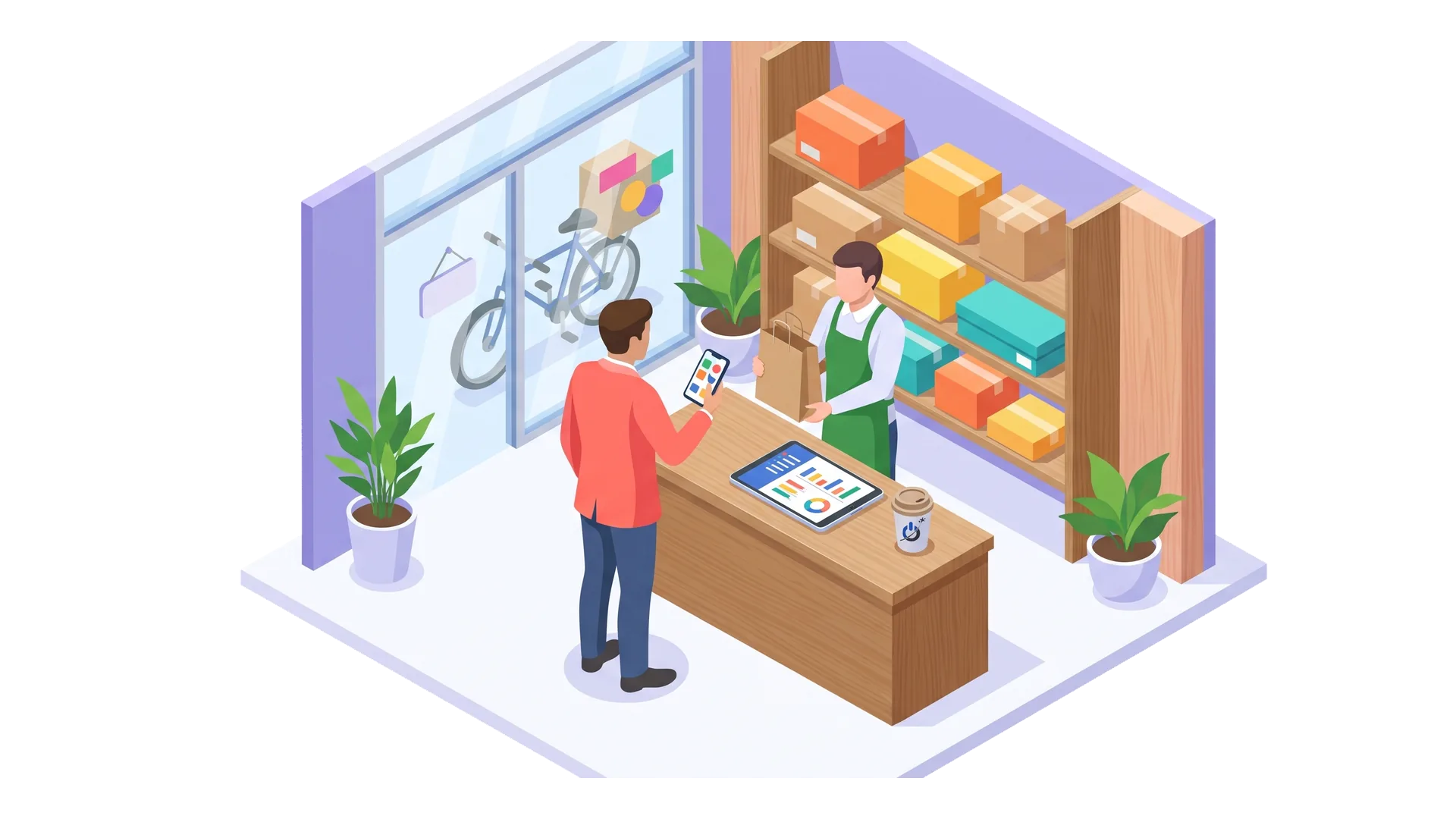
Phygital store: where to start on a small budget
Phygital is not reserved for big retailers. For an independent shop, four actions already deliver the essentials: show store stock on the website, offer free in-store pickup, keep your Google Business Profile up to date (hours, products, reviews) and accept contactless and mobile payment. Solutions such as Shopify with its Shopify POS, or WooCommerce and PrestaShop connected to POS software, let you start without heavy development. Our Shopify team can set this up for you.

Conclusion
Phygital is not a tech fad: it is the answer to customers who constantly move from phone to store and from store to website. A successful phygital store rests on simple foundations (synchronized stock, unified data, trained staff), enriched with tools chosen to simplify the journey, not to impress. Start with click and collect and local visibility, measure, then add the building blocks that bring real value to your customers.
Frequently asked questions about phygital retail
What is phygital?
Phygital blends “physical” and “digital”. It describes a strategy that merges the in-store experience with digital tools to offer a seamless shopping journey: online research, in-store try-on, mobile payment, order pickup, unified loyalty.
What is the difference between phygital and omnichannel?
Omnichannel unifies all of a brand’s sales and communication channels (store, website, app, social media, customer service) so customers find the same information everywhere. Phygital emphasizes blending physical and digital at the same moment, often inside the store itself.
What is a phygital store?
It is a store that integrates digital tools to enrich the experience: kiosks giving access to the full catalog, electronic labels, mobile payment, smart fitting rooms or mirrors, augmented reality, online order pickup. The store becomes a touchpoint connected to the website and the app.
Is phygital accessible to small retailers?
Yes. Showing stock online, offering in-store pickup, keeping your Google listing up to date and accepting contactless payment are low-cost first steps. Platforms such as Shopify with its POS, or WooCommerce connected to POS software, let you start without a big investment.
Which technologies should a phygital strategy use?
The most common are click and collect, a POS connected to the website, mobile payment, interactive kiosks, electronic shelf labels, a mobile app with built-in loyalty, augmented reality and RFID tagging for stock tracking. The choice depends on your customers’ journey and your budget.
How do you measure the success of a phygital strategy?
Track the share of orders picked up in store, additional revenue from pickups, the share of customers active on several channels, purchase frequency, return rate and customer satisfaction. Combine POS, website and CRM data to measure what each setup really brings.