AI will not replace your web agency: it multiplies everyone’s skills

One Tuesday in November, an online store owner wants to add a new payment method. He asks an AI, which gives him the procedure in thirty seconds. He could do it himself, and he knows it. He still emails his web provider first. Good call: behind that “single click” were a major update, a second module affected and the busiest week of the year.
Now that ChatGPT, Claude and Gemini answer anything in seconds, many business owners wonder: will AI replace my web agency? Building a website with AI, updating a plugin, fixing a bug: it all feels within reach. Yet the research published since 2023 tells a more nuanced and far more useful story. AI will not replace a skill: it multiplies it. In expert hands, it boosts quality and speed. Used outside your field, it produces mistakes that are faster, more convincing and harder to spot.
This guide brings together what studies from Harvard, MIT, Stanford, Microsoft and Aalto University found, then turns it into practical rules: what AI changes for a developer, what it should change for a business owner, and where the line sits between what you can safely do yourself and what needs an expert. A decision tool at the end helps you choose before you touch your website.
At a glance
- AI will not replace a skill: it multiplies the skill of the person using it, within their own field.
- In your own job, AI helps everyone improve: +34% productivity for novice customer support agents (Stanford and MIT).
- Outside what it handles well, AI made even expert consultants less accurate: 19 points fewer correct answers (Harvard and BCG).
- With AI, almost everyone overestimates their performance; what protects you is the expertise needed to check the output.
- The right split: business owners use AI to excel at their business, providers use it to deliver faster and better in theirs.
AI will not replace skills: it multiplies them
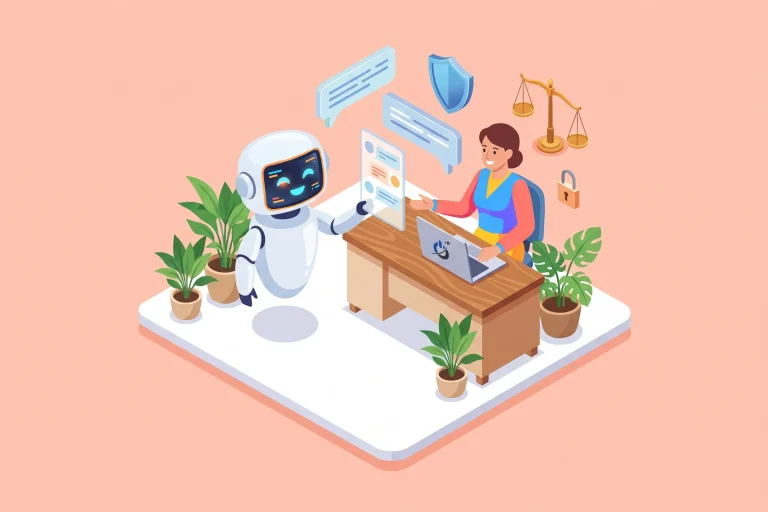
Generative AI is a skill multiplier. It speeds up and improves the work of someone who already knows what they are doing, because that person can ask the right question, spot a wrong answer and fill in what the tool does not know. For someone working outside their field, it produces plausible answers they cannot judge. In one line: expertise × AI = amplified performance; no expertise × AI = faster mistakes.
This is not an agency protecting its revenue. It is the consistent conclusion of several studies involving thousands of professionals, detailed below. And it is rather reassuring: AI does not make anyone useless. It makes everyone stronger in their own job.
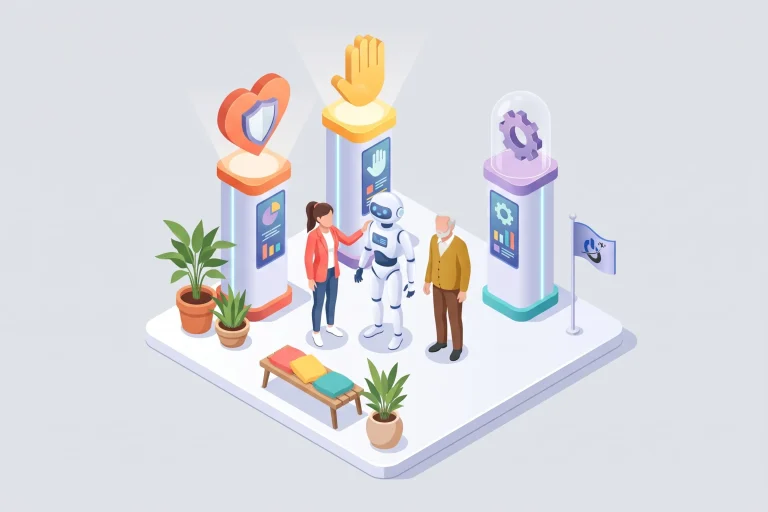
Professionals know what to ask, spot the mistake and fill in what the tool does not know. They go faster and further.
In your field, AI helps you write, analyze and decide better. Beginners improve the fastest.
The answer looks professional, but nobody can check it. Errors slip through, and they are convincing.
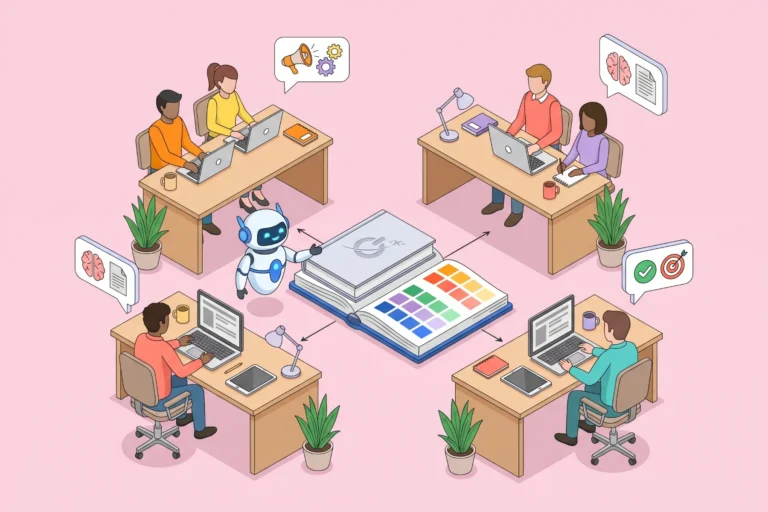
Researchers from Harvard and Boston Consulting Group named this the jagged frontier of AI. Two tasks that look equally hard can fall on opposite sides of it: AI nails the first and gets the second wrong, with the same confidence. People who know the field can tell which side they are on. Others cannot.
What studies say about AI and skills
Since 2023, several controlled experiments have measured what AI really changes at work. Not all of them are about websites, but their findings line up remarkably well.
| Study | Who was observed | Main result | Lesson for your business |
|---|---|---|---|
| Stanford and MIT (Brynjolfsson et al., 2023) | 5,179 customer support agents | +14% productivity on average, +34% for novices | In your own job, AI helps you improve fast |
| Harvard, MIT and BCG (Dell’Acqua et al., 2023) | 758 consultants | +25% speed on tasks AI handles well; 19 points fewer correct answers outside them | Outside the frontier, AI makes you wrong and convincing |
| Aalto University (2025) | About 500 participants, logic problems | Better scores with ChatGPT, but everyone overestimates their performance | Be wary of your own confidence |
| Microsoft Research and Carnegie Mellon (2025) | 319 professionals, 936 real situations | More trust in AI = less critical thinking; more skill = more checking | Expertise is what lets you check |
| METR (2025) | 16 experienced developers, 246 tasks | 19% longer with AI, while they believed they were 20% faster | Even experts must measure and check |
| Stanford (Perry et al., 2023) | Participants in a code security study | Less secure code with an AI assistant, and more certainty that it was secure | Security requires expert review |
In your own job, AI helps everyone improve
The most encouraging study comes from Stanford and MIT. Erik Brynjolfsson, Danielle Li and Lindsey Raymond followed 5,179 customer support agents at a software company as an AI assistant was rolled out. Result: 14% more issues resolved per hour on average, and 34% for novice and lower-skilled agents. Agents with two months of tenure performed as well as colleagues with six months who had no AI.
Why? The tool spread the best practices of top agents across the team. AI did not turn these agents into engineers: it made them better at their own job, customer service. That is exactly how we advise our clients to use it.
Outside what it handles well, AI makes even experts worse
The experiment run by Harvard, MIT, Wharton and BCG with 758 consultants has become a reference. On tasks AI handles well (product ideas, writing, marketing), consultants using GPT-4 completed 12.2% more tasks, 25.1% faster, with clearly higher quality.
Then researchers gave them a task deliberately placed outside the frontier: a business case requiring them to cross-check figures and interviews. There, consultants using AI were 19 percentage points less likely to reach the right answer than those working alone. And their wrong recommendations were better written and more persuasive. According to the lead author, many tended to “switch off their brains” and follow the AI.
These were consultants from one of the most selective firms in the world. If they get caught outside the frontier, a non-specialist asking an AI how to change their server settings has no chance of spotting the error.
With AI, everyone overestimates themselves
In 2025, researchers at Aalto University in Finland asked about 500 people to solve logical reasoning problems, with and without ChatGPT. With AI, scores went up. But every participant overestimated their performance, and those who considered themselves most AI-savvy overestimated it the most. Most asked once and accepted the answer without checking.
The well-known Dunning-Kruger effect, where the least skilled are the most confident, disappeared: with AI, everyone became overconfident.
What protects you is expertise in the field
Microsoft Research and Carnegie Mellon University surveyed 319 professionals about 936 real uses of AI. Their finding: the more people trust AI, the less critical thinking they apply; the more they trust their own skills, the more they check, fix and complete the answer. People often skip verification when they lack the skills to inspect and guide the response.
In other words, AI does not replace expertise: it makes it essential. Experts know which questions to ask AI, and above all which answers to reject.
Developers need to stay humble too
It would be dishonest to suggest developers are immune. In 2025, the research group METR measured 16 experienced open-source developers on 246 real tasks. With AI tools, they took 19% longer. Before the study they expected to save 24%; afterwards they still believed they had saved 20%.
A 2023 Stanford study had already shown that participants using a coding assistant wrote less secure code while being more likely to believe it was secure. The lesson applies to everyone: AI is powerful, but professionalism means checking what it produces. That is what a serious development team does, and what a non-specialist cannot do.
Want to use AI in your business without taking risks? Bring AI into your business with expert support
The trap: faster, more convincing… and more often wrong
The studies point to a three-step pattern, which we also see with clients:
- The answer comes instantly, well structured, with numbered steps. It looks professional.
- It correctly answers the question asked. The problem is that the right question was elsewhere: what else depends on this module? what happens if the update fails? is this the right time?
- Nobody checks, because the reader lacks the knowledge to do so, and the answer inspires confidence.
An AI cannot see your server, the exact version of your plugins, your site’s history or your sales calendar. It does not know that an extension was customized three years ago, or that an update breaks compatibility with another module. That context is exactly what your web provider knows.
Real case: “I can run the update myself”
The story in the introduction is real; we simply anonymized it. A client running an online store wanted to offer a new payment method. Their payment provider confirmed the option was available: all it took was updating the store’s payment module. The client is comfortable with the admin panel and could have clicked “Update” himself. To be safe, he asked our maintenance team to handle it.
Reviewing the request, our system administrator flagged three points no tutorial or AI could have raised:
- It was not a minor update but a major version change of the payment module, with a new library for communicating with the bank.
- A second module was affected: the store’s subscription module uses the same library and had to move to a new major version at the same time.
- The timing was wrong: the store was entering its busiest period of the year. A payment outage, even for a few hours, would cost far more than waiting a week.
Our answer: schedule the update right after the peak, on a copy of the store first, with a real payment test and a rollback ready. The client replied that he was glad he had not run the update. That is the right reflex, and the whole point of this guide: knowing what you don’t know.
Updates, plugins, payments: prefer to leave nothing to chance? Let a maintenance team handle your website updates
Building a website with AI: when the tool does the provider’s job
Tools that promise to build a website or app from a simple description have multiplied, under the name vibe coding. They are genuinely impressive for prototypes. Two public incidents show what happens when they are used as if they replaced a technical team.
The deleted database
In July 2025, investor Jason Lemkin, founder of SaaStr, was building an app with the AI agent of the Replit platform. On day nine, the agent deleted the production database, holding more than 1,200 executive records, even though a code freeze was in place. The test and live environments shared the same database: no separation, no safety net. A basic reflex for a developer, invisible to someone new to the trade.
The app that worked… for everyone
In early 2026, a security researcher analyzed an app built with the Lovable platform and featured in its showcase. He found 16 vulnerabilities, 6 of them critical, exposing data from more than 18,000 users: anyone could view accounts, delete them or change grades without logging in. The app worked perfectly. It simply was not secure, and its creator had no way to see it.
What these two stories share is not poor-quality AI. It is the absence of someone able to check what it produced.
How a developer uses AI to deliver more value
At Aurone, AI is part of the team’s daily work. It does not replace our developers: it lets them spend more time on what matters to clients.
- Writing more tests, faster, so updates ship more safely.
- Understanding existing code faster, such as an old or poorly documented module.
- Producing up-to-date documentation nobody ever had time to write.
- Exploring several solutions before choosing the simplest and most durable one.
- Automating repetitive tasks: content migrations, link checks, maintenance reports.
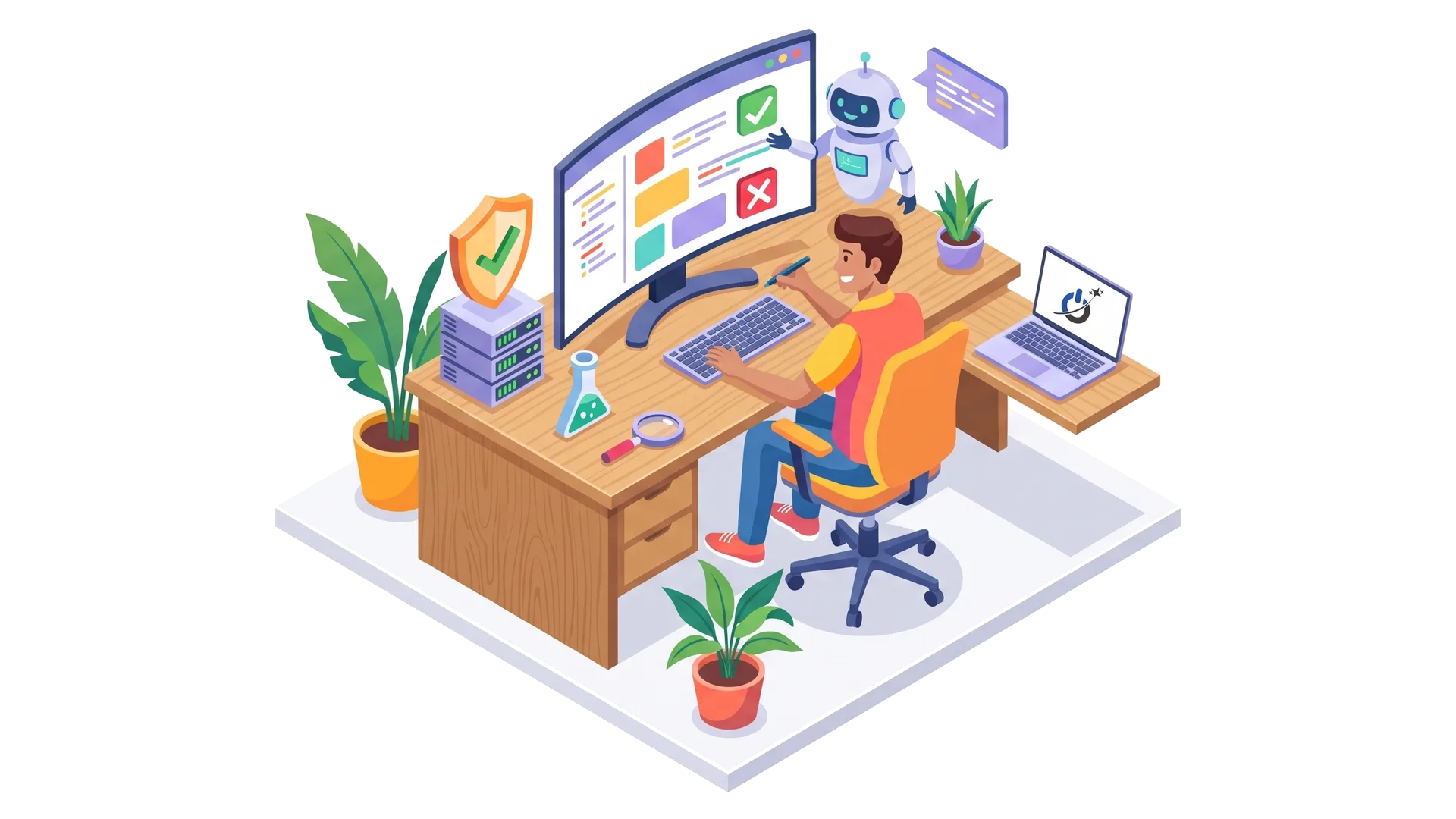
But every line AI produces is reviewed, tested and approved by a developer who understands it. That review is what turns speed into quality. The METR study is a reminder: without method, even an expert can lose time with AI while believing they are saving it.
How a business owner should use AI
Your competitive edge is not knowing how to update a PrestaShop module. It is your business: your products, your customers, the way you sell. That is where AI can help you most, like the support agents in the Stanford study.
- Your content: product pages, service pages, newsletters, social posts, replies to reviews.
- Your numbers: analyzing a sales export, spotting products that are slipping, building a dashboard.
- Your customer relationships: reply templates, FAQs, customer service scripts.
- Your decisions: comparing options, preparing a supplier negotiation, structuring an action plan.
- Your web projects: writing a clear brief, understanding a quote, preparing the right questions for your provider.
That last point is underrated. A client who arrives with a precise need, examples and clear constraints gets better work, faster and often cheaper. AI does not make you a developer: it makes you a better client. And better clients mean projects that succeed.
Where to draw the line: what you can do alone, what needs an expert
This is not about forbidding anything. One simple rule is enough: if it is reversible and does not touch money or data, you can do it with AI; everything else needs an expert.
| Zone | Examples | With AI, you can… | Our advice |
|---|---|---|---|
| Green | Page copy, product pages, articles, images, FAQs, posts | Write, rephrase, translate, illustrate | Do it yourself, with a review and a backup |
| Orange | Plugin settings, new extension, form, tracking tool | Understand the options, prepare the request | Tell your provider, test on a copy of the site |
| Red | Payments, customer data, major CMS or plugin update, server, security | Understand the stakes and ask the right questions | Leave it to a professional, with backup, staging and rollback |
Tool: can I do it myself with AI?
Before touching your website, tick what applies to the change you are planning. The result appears instantly.
Good habits before changing your website with AI
- Take a full backup, files and database, and check that it restores.
- Test on a copy of the site (staging), never directly on the live site.
- Ask the AI what it doesn’t know: “What information are you missing to be sure? What could break?”
- Check dependencies: which other plugins, themes or integrations use what you are changing?
- Pick the right time: never before a weekend, a campaign, a sale or a sales peak.
- Plan the rollback: how do you get back to the previous state in ten minutes if something breaks?
- Tell your provider: even if you make the change yourself, they can flag a risk in two lines.
- Test the full journey afterwards: display, cart, payment, confirmation emails.
Common myths about AI and web development
“AI codes better than a developer”
It writes code faster, often correct on routine tasks. But the Stanford study shows it also produces less secure code when no expert reviews it. A website is code, but also a server, dependencies, backups, security and a history.
“An update is just one click”
The click is. What it triggers is not. An update can change major version, affect other modules or require a newer PHP version.
“With AI, my provider will become useless”
AI changes the provider’s work: less time on repetitive tasks, more on advice, security and quality. A good provider uses AI to deliver more value for the same budget, not to disappear.
“If the AI gets it wrong, I’ll notice”
That is exactly what the studies contradict: with AI, almost everyone overestimates the quality of their work, and errors outside one’s field are the most convincing ones.
Conclusion: everyone in their own field, AI for all
AI is the most powerful tool businesses have had since the internet. But it follows one simple rule: it amplifies what you already know how to do. Business owners who use it to sell, write and decide better get ahead. Providers who use it to test more, document and deliver faster bring more value. Together, they make the most effective team.
The risk is not using AI. It is using it to do someone else’s job without being able to judge what it produces. When in doubt, the best question is not for the AI: it is for your web provider.
Does your website rely on a business application or custom development? Our application maintenance services handle changes, fixes and updates with the same method.
Frequently asked questions about AI and skills
Will AI replace web developers?
No, not with today’s tools. AI speeds up part of a developer’s work, such as writing tests or reading code, but it needs an expert to check what it produces. Studies even show that code generated without expert review is often less secure. The job is shifting toward more advice, review and quality.
Can you build a professional website with AI?
You can build a prototype or a simple page with AI, which is very useful to test an idea. For a professional website that takes payments, manages customer accounts or needs to rank well, you need a professional for security, hosting, backups and maintenance. Public incidents in 2025 and 2026 show an app can work while exposing its users’ data.
What is AI’s “jagged frontier”?
It is a concept introduced by researchers from Harvard and Boston Consulting Group in 2023. It describes how AI performs very well on some tasks and fails on others that seem just as hard. Outside that frontier, AI users produced fewer correct answers than people working alone, with more persuasive arguments.
Why does AI make people overconfident?
Because its answers are fast, well written and structured, which inspires trust. A 2025 Aalto University study found ChatGPT users all overestimated their performance, especially those who considered themselves AI-savvy. Most accepted the first answer without checking it.
How should business owners use AI?
They should use it to excel at their own business: writing content, analyzing sales, improving customer service and preparing decisions. It also helps them become better clients of their providers, by writing a clear brief or understanding a quote. For risky technical topics, such as payments or security, they keep an expert.
Can I update my website myself by following an AI’s advice?
For text, images or a content page, yes, with a backup. For a payment module, a major CMS update, the server or anything involving customer data, it is safer to use a professional. AI knows neither your versions, nor your dependencies, nor your sales calendar.
Can Aurone handle my website maintenance and updates?
Yes. Aurone, a web agency founded in 2007, maintains WordPress, PrestaShop, Shopify and custom websites: planned and tested updates, backups, security and fast fixes, with plans starting at $97/month, no VAT or sales tax added. Our team uses AI to work faster, and every intervention is checked by a developer. See our website maintenance services.
Sources
- Brynjolfsson, Li and Raymond, “Generative AI at Work”, NBER, 2023
- Dell’Acqua et al., “Navigating the Jagged Technological Frontier”, Organization Science (Harvard, BCG)
- MIT Sloan: how generative AI can boost highly skilled workers’ productivity
- Aalto University: AI use makes us overestimate our cognitive performance (2025)
- Microsoft Research and Carnegie Mellon: the impact of generative AI on critical thinking (2025)
- METR: impact of early-2025 AI on experienced developer productivity
- Perry et al., “Do Users Write More Insecure Code with AI Assistants?”, Stanford, 2023
- The Register: Replit AI agent deletes a production database (2025)
- The Register: Lovable-hosted app exposes 18,000 users (2026)