What Is a Web Developer? Definition, Job and 6 Rules of a Professional Developer
This guide first answers the simple question: what is a web developer? Definition, specialties (front-end, back-end, full-stack), day-to-day tasks, skills and training paths. Then it details the rules that make a professional web developer: honesty about deadlines, clean code, measured refactoring, a client-first mindset and sensible use of AI. Whether you are considering the job, already doing it or hiring, you will know what to expect from a professional in web development.
At a glance
- A web developer designs, programs and maintains websites and applications that run in a browser.
- There are three main specialties: front-end (the interface), back-end (the server and data) and full-stack (both).
- The job calls for technical skills (HTML, CSS, JavaScript, a server-side language, Git, security) and soft skills (listening, communication, rigor).
- A professional web developer stands out through honest estimates, clean code and genuine care for the client.
- AI has become an everyday tool of the trade, but judgment and review remain the developer’s responsibility.
What is a web developer?
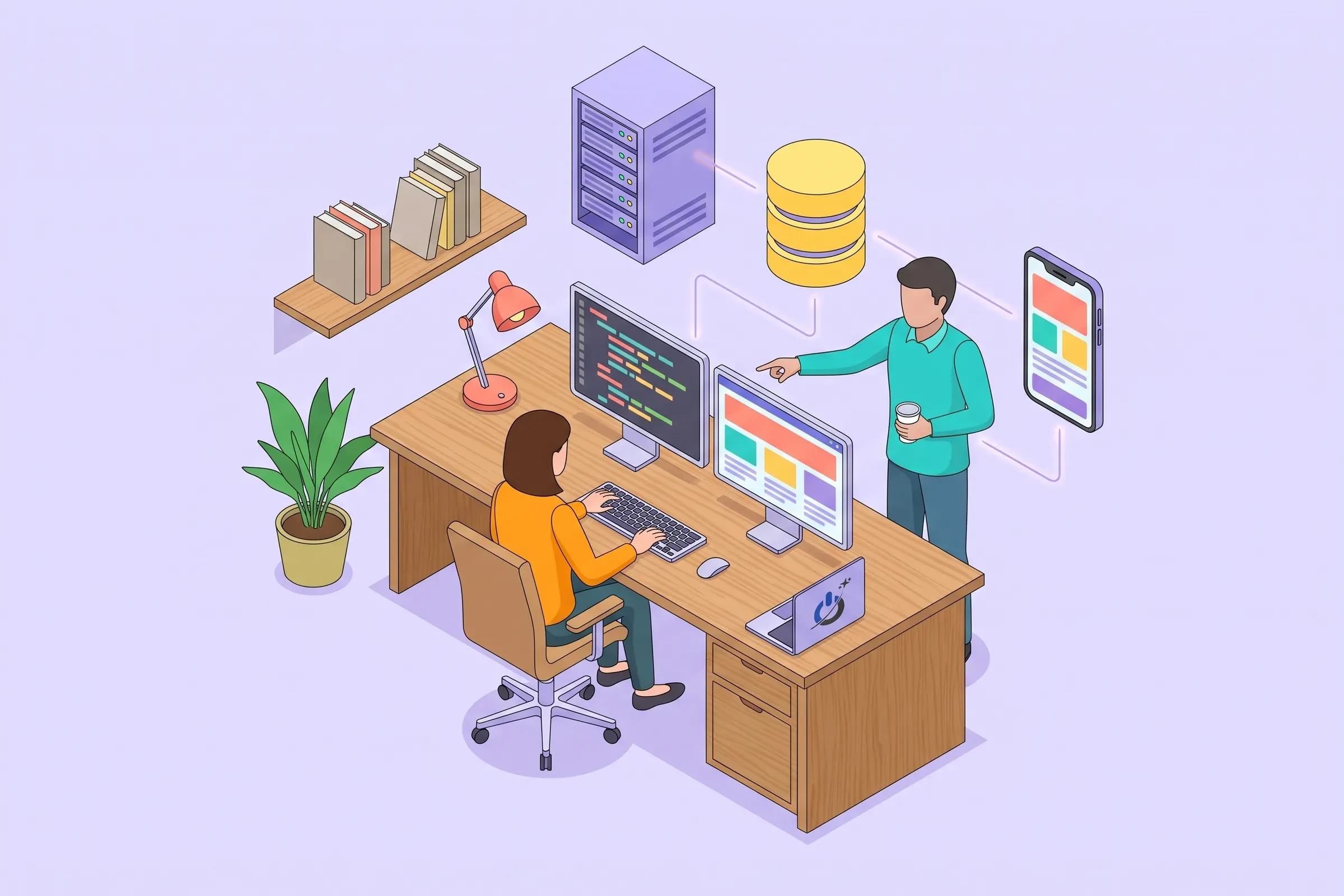
A web developer is a software specialist who builds websites and applications that run in a browser: brochure sites, online stores, client portals, business tools, web apps. They turn a need (selling online, booking appointments, managing stock) into code, test the result, put it live and keep it evolving.
The role goes by other names depending on the company: web programmer, coder, web application developer, software engineer. It differs from the front-end integrator, who focuses on page layout, and from the web designer, who shapes how the site looks.
Front-end, back-end, full-stack: the three specialties
| Specialty | What they do | Common technologies |
|---|---|---|
| Front-end | the interface: pages, forms, animations, mobile adaptation, accessibility | HTML, CSS, JavaScript, React, Vue, Angular |
| Back-end | the server: business logic, database, accounts, payments, APIs, security | PHP (Symfony, Laravel), Node.js, Python, Java, C# (.NET), SQL |
| Full-stack | both, from the database to the screen | a complete stack, for example JavaScript end to end or PHP + JavaScript |
| CMS and ecommerce | building and customizing sites on existing platforms | WordPress, WooCommerce, PrestaShop, Shopify, Drupal |
In a small company, one person often covers several roles. In an agency or a large team, specialties split further, with DevOps, QA (testing) and architect profiles on top.
What a web developer does day to day
Writing code is only part of the day. A web developer:
- analyzes the need with the client or project manager and estimates the workload;
- chooses or applies the project’s technologies (a CMS like WordPress or PrestaShop, a framework like Symfony or Laravel, or custom development);
- programs features, tests them and fixes bugs;
- reviews colleagues’ code and has their own code reviewed;
- deploys, monitors, secures and maintains the application over time;
- documents their work and keeps up with new technologies.
Web developer skills
| Technical skills | Soft skills |
|---|---|
| HTML, CSS and JavaScript | listening to client needs |
| a server-side language and framework | clear communication, without jargon |
| databases (SQL) | rigor and organization |
| Git and team work on code | honesty about deadlines and risks |
| web security (OWASP), automated testing | curiosity and continuous learning |
| performance, accessibility, SEO basics | team spirit and openness to code review |
Soft skills matter as much as technical ones. A developer who listens poorly delivers the wrong feature, even if it is perfectly coded.
What makes a professional web developer
“Professional” does not only mean being paid to code. It describes an attitude: delivering what was promised, telling the truth about what will not be, and leaving behind code that others can pick up. The software craftsmanship movement, popularized in particular by Sandro Mancuso’s book The Software Craftsman, formalized this idea. Here are the six rules we consider essential.
0. The project is not yours, it is the client’s
This is the ground rule, hence number zero. A website or application exists because someone needs it for their business. A professional developer puts themselves in that client’s shoes: they look for what will truly help them sell, save time or serve their own customers better, rather than what is most comfortable or most fun to code.
1. Say no and estimate honestly
“We’ll try” is the most dangerous promise in the trade. In practice it means two things: overtime and code written too fast. Both end up costing more than the delay you wanted to avoid.
A professional web developer says no to an unrealistic deadline, asks for time to make a serious estimate, then offers an alternative: deliver the most important feature first, cut the scope, move the date. Clients trust someone who tells them the truth more than someone who promises everything.

2. Keep your code clean
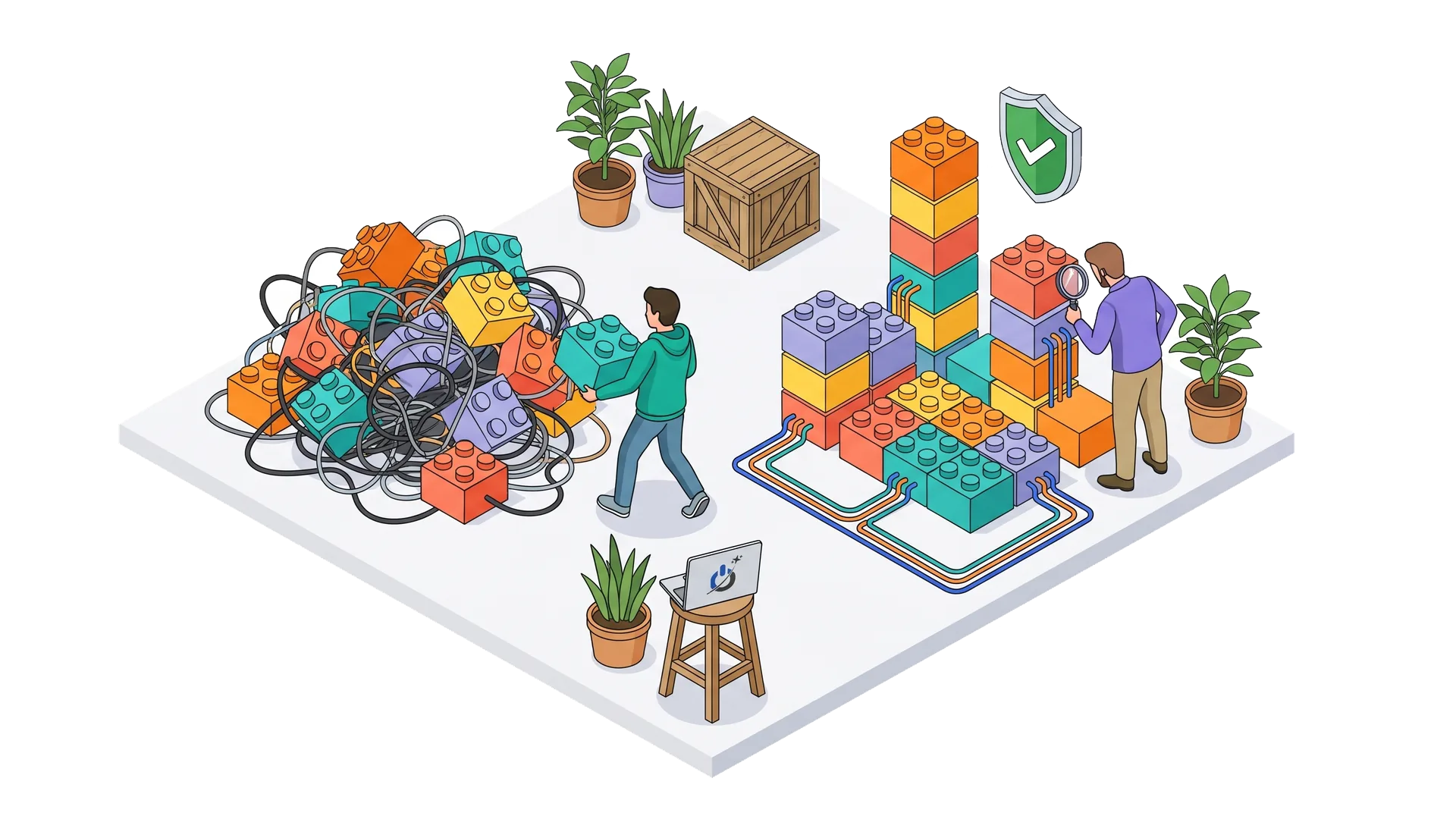
Clean code is easy to read: explicit variable and function names, short functions that do one thing, no duplication, automated tests on critical parts. It takes a little longer to write and much less to maintain. Quick-and-dirty code left “for later” becomes technical debt: every change costs more than the one before.
3. Don’t be the frog in slowly heating water
The image is well known: a frog in water that heats up slowly does not react. In a project, it is the small slips you accept one by one: one test fewer, a temporary fix, a meeting that slides, an out-of-scope request handled without a word. A professional developer spots them early and raises them. Two habits help: really listening to the client before proposing a solution, and speaking plainly, without jargon, so everyone understands the risks.
4. Only code what is needed
Developers sum up this principle as YAGNI: “You aren’t gonna need it.” Adding an option “just in case”, designing for traffic the site will never get, building a feature nobody asked for: all of this adds code to test, secure and maintain, with no value for the client.
5. Refactor, but in moderation
Refactoring means improving the structure of code without changing its behavior. It is essential to keep a project healthy. But endlessly rewriting code that works, with no tests to check nothing breaks, is also a mistake. Good practice: improve the code a little each time you touch it, and only when tests protect it.
| Rule | In practice |
|---|---|
| 0. The project belongs to the client | look for what truly helps them reach their goal |
| 1. Say no, estimate honestly | never “we’ll try”; offer a costed alternative |
| 2. Clean code | clear names, short functions, tests, review |
| 3. Spot drift early | listen, speak plainly, flag risks |
| 4. Only what is needed | no feature “just in case” (YAGNI) |
| 5. Measured refactoring | improve a little with every change, protected by tests |
Need a team of professional web developers? Discover our web application development
Web developers and artificial intelligence
AI is now part of everyday tooling. According to the 2025 Stack Overflow survey (more than 49,000 developers worldwide), 84% of respondents use or plan to use AI tools in their work, and just over half of professional developers use them every day. The same survey shows that 46% of developers distrust the accuracy of these tools, more than those who trust them.
For a professional, AI speeds up repetitive code, documentation lookups and test writing. It does not replace understanding the need, reviewing the output or taking responsibility for what goes into production. “Almost right” generated code is still code to check.
How to become a web developer
Several paths lead to the job, and degrees matter less than real work:
- In France: BTS SIO (SLAM option), BUT in computer science or multimedia, professional bachelor’s degrees, engineering schools, and the “Développeur web et web mobile” or “Concepteur développeur d’applications” professional certifications, also open to career changers.
- In Belgium: a bachelor’s in computer science (haute école) or vocational adult education programs.
- In Switzerland: the CFC in computer science (apprenticeship), then higher vocational training.
- In Canada: a college diploma in computer science technology (DEC in Quebec), a short certificate (AEC) or a university bachelor’s degree.
In every case, a portfolio of real projects (live sites, open source contributions, personal projects published on GitHub) carries a lot of weight in hiring.
How to grow as a developer
- Have your code reviewed and review other people’s code.
- Write tests, even a few, on sensitive parts.
- Learn one framework in depth rather than skimming ten technologies.
- Understand neighboring topics: security, performance, SEO, accessibility.
- Read, follow official documentation and use good tools.
- Work on communication: learn to explain a technical choice to a non-technical client.
Freelance, employee or agency: how to work?
Web developers work in companies, web agencies, IT service firms or for themselves. Freelancing brings autonomy but also means handling sales, invoicing and service continuity. An agency brings a team, cross-reviews and the ability to take over a project if someone is away. For a client, the choice depends mostly on project size and duration: we compare both options in our article freelancer, developer or agency. And if you hand work to developers, our guide on how to report a bug will make the collaboration smoother.
Are you a professional web developer?
Key takeaways
A web developer builds and maintains websites and applications that run in a browser, on the interface side (front-end), the server side (back-end) or both (full-stack). What makes a professional has less to do with the list of languages mastered than with a way of working: the project serving the client, honest estimates, clean and tested code, only what is useful, measured refactoring and clear-eyed use of AI.
Frequently asked questions about the web developer job
What exactly is a web developer?
A web developer is a software specialist who builds, programs and maintains websites and applications used in a browser. They turn a need into features, test them, put them live and keep them evolving. Depending on their specialty, they work on the interface (front-end), on the server and data (back-end), or on both (full-stack).
What is the difference between front-end, back-end and full-stack developers?
A front-end developer builds what users see and interact with, using HTML, CSS and JavaScript. A back-end developer programs the server side: business logic, database, security and connections to other services. A full-stack developer masters both and can deliver a mid-sized project alone.
What skills does a web developer need in 2026?
The foundations remain HTML, CSS and JavaScript, a server-side language (PHP, Python, Node.js, Java or C#), databases, Git and web security principles. Add testing, performance, accessibility and sensible use of AI tools. On the human side, listening, communication and rigor make the difference.
How do you write clean, maintainable code?
Choose explicit names, write short functions that do one thing and avoid duplication. Protect critical parts with automated tests and have your code reviewed. Improve the structure a little with every change rather than rewriting everything at once.
Will artificial intelligence replace web developers?
AI automates part of the repetitive code and speeds up research, but it also produces “almost right” answers that must be checked. Understanding the need, designing an architecture, making trade-offs and owning what goes into production remain human tasks. The job is changing more than it is disappearing.
Do you need a degree to become a web developer?
It is not mandatory, but a recognized qualification makes the first job easier to land: a two-year technical diploma, a professional certification, a bachelor’s degree or an apprenticeship, depending on the country. Recruiters mostly look at real work: a portfolio of live projects and readable code on GitHub often weigh as much as a degree.