Generative Engine Optimization: Can ChatGPT Read Your Site?
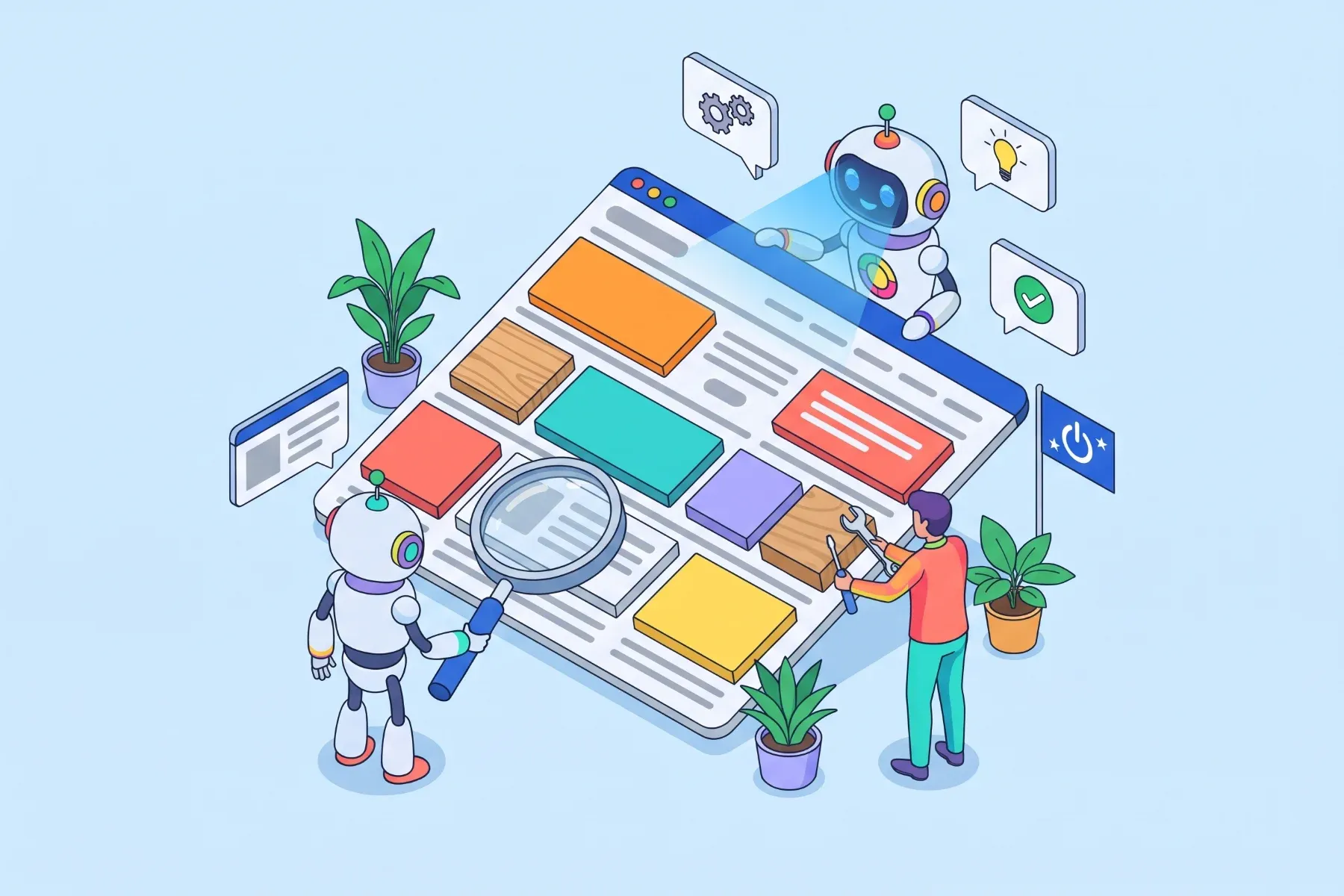
Being visible on ChatGPT, Gemini, or Perplexity does not require a secret recipe, but rather a few conditions that many websites do not yet meet: letting the right bots in, being indexed by Bing as much as Google, clearly describing who you are, and publishing pages that these answer engines can cite. This guide explains how AI assistants choose their sources, details a six-step method for generative engine optimization, compares LLM SEO to traditional Google search optimization, and offers a self-diagnostic tool to evaluate your site.
At a glance
- Being visible on ChatGPT first requires that its bots (OAI-SearchBot) can read your site and that it is well indexed by Bing.
- Gemini and Google’s AI Overviews rely on Google’s index: traditional SEO remains the foundation.
- Assistants cite pages that answer directly, with verifiable facts, a clear structure, and a well-identified company.
- Mentions of your brand off-site (media, reviews, LinkedIn, directories) weigh as much as your own content.
- Regularly test your key questions in ChatGPT and Gemini, and track the visits they send in Google Analytics.
Being Visible on ChatGPT: What Are We Talking About?
Being visible on ChatGPT means the assistant mentions your company, products, or content in its answers, ideally with a clickable link to your site. This visibility happens on three levels: being found (the assistant can access your pages), being mentioned (your name appears in the answer), and being cited (the answer links to your page as a source).
We also call this GEO (generative engine optimization), AI search optimization, or LLM SEO. The terms vary, but the goal is the same: ensuring answer engines understand your business and consider you reliable enough to recommend. An answer engine does not return a list of ten links: it writes an answer based on a few sources, and only those sources get the visibility.
The stakes are growing fast. Demandbase measured that visits sent by ChatGPT to the B2B sites they track jumped from about 645,000 in June 2025 to 2.6 million in June 2026, a 303% increase in one year (figures reported by Digidop). The volume is still lower than Google’s, but these visitors often arrive with a highly specific intent.
Answer Engines: How ChatGPT, Gemini, and Perplexity Find Their Sources
Not all assistants pull from the same place. Understanding how they work prevents you from optimizing for the wrong tool.
Two Ways to Answer
An assistant answers either from what it learned during training, without citing sources, or by running a real-time web search and writing a summary with links. For a question about a service provider, a price, or news, the online search usually triggers: this is where your site can be cited.
ChatGPT: Its Own Bot and the Bing Index
OpenAI documents several bots. OAI-SearchBot is used to surface sites in ChatGPT search answers; according to OpenAI, a site that blocks it will no longer appear in these answers, except as a simple navigation link. GPTBot collects content to train the models, and ChatGPT-User retrieves a page when a user or the assistant views it during a conversation (OpenAI documentation). To find pages, ChatGPT also relies on search providers, including Bing: a Seer Interactive study found that 87% of over 500 SearchGPT citations matched top Bing results, compared to 56% for Google.
Gemini and AI Overviews: The Google Index
Gemini, Google’s AI mode, and AI Overviews rely on the Google index and its Knowledge Graph. Google states that no special optimization is needed: a page must be indexed and eligible for a snippet in the results, and standard SEO best practices apply (Google Search Central).
Perplexity, Copilot, and Others
Perplexity almost always cites its sources and searches the web for every question. Copilot, integrated into Windows and Microsoft 365, relies on Bing. Result: a site ranking well on Google but ignored by Bing loses a large chunk of its visibility in assistants.
| Assistant | Where it finds sources | Bot to allow | Your priority |
|---|---|---|---|
| ChatGPT | OpenAI bot and search providers, including Bing | OAI-SearchBot (and ChatGPT-User) | Bot access, Bing indexing, pages that answer directly |
| Gemini, AI Overviews, AI mode | Google index and Knowledge Graph | Googlebot | Traditional SEO, accurate structured data, business profile |
| Perplexity | Web search for every question | PerplexityBot | Factual, recent, well-sourced content |
| Copilot | Bing index | Bingbot | Bing Webmaster Tools, sitemap, IndexNow |
Step 1: Let Answer Engine Bots Read Your Site
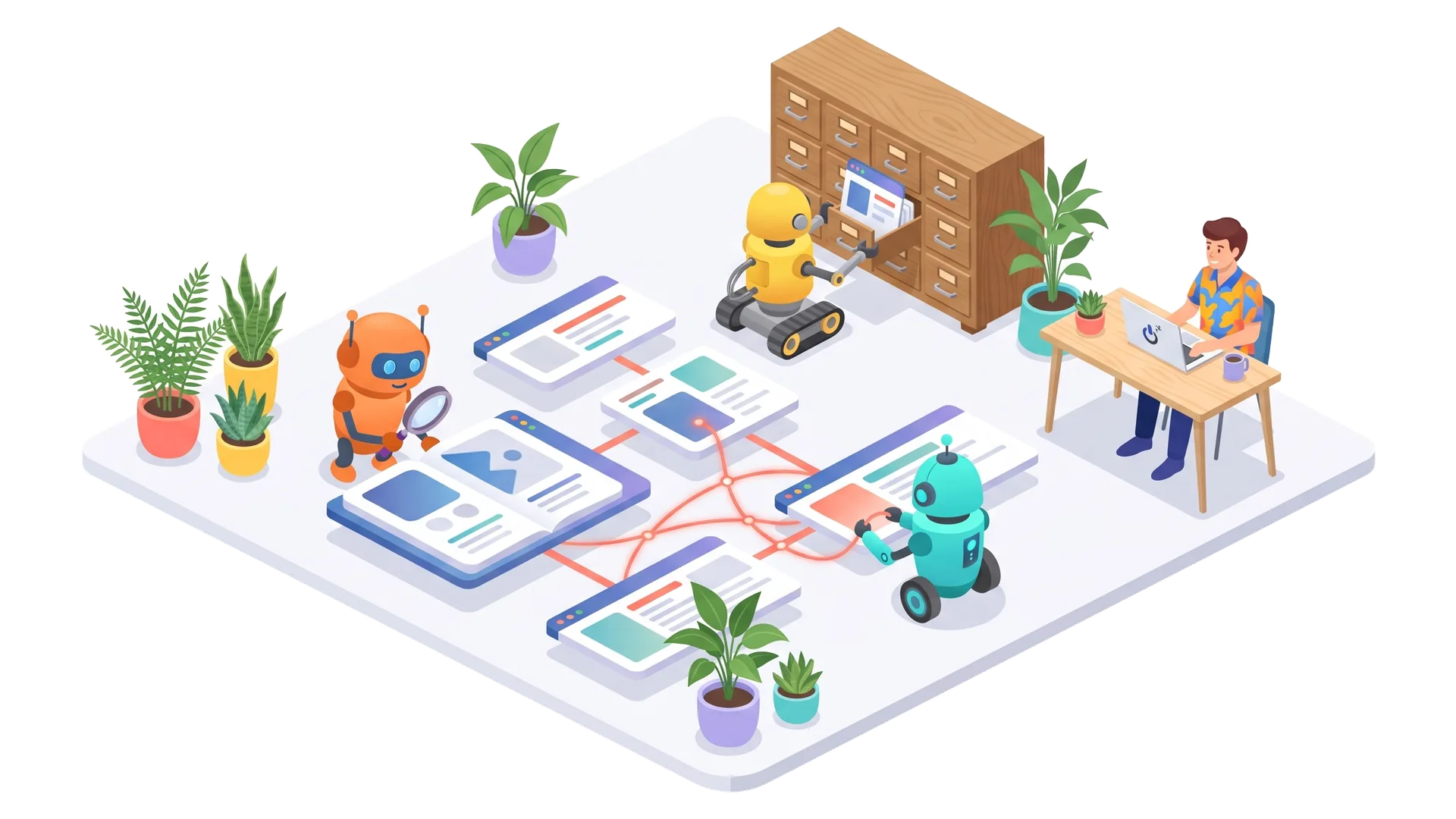
This is the most common cause of invisibility, and the easiest to fix. If your robots.txt file, firewall, or host blocks assistant bots, no content, no matter how good, will be cited.
Check the robots.txt File
Open your-site.com/robots.txt and look for OAI-SearchBot, GPTBot, PerplexityBot, or a rule blocking all bots. You can allow search while refusing model training, as OpenAI manages the two bots separately:
User-agent: OAI-SearchBot
Allow: /

User-agent: ChatGPT-User
Allow: /

User-agent: GPTBot
Disallow: /
This choice is strategic: blocking GPTBot protects your texts from training without removing you from ChatGPT search; blocking OAI-SearchBot, however, removes you from it.
Check the Firewall and CDN
Since July 1, 2025, Cloudflare blocks AI bots by default on new domains and offers existing customers a one-click block (Cloudflare). If your site uses Cloudflare or another web application firewall, check which bots are allowed: a security setting can make you invisible without anyone noticing. Our advice: explicitly allow search bots and decide on a case-by-case basis for training bots.
Make Content Readable Without JavaScript
Assistant bots execute JavaScript poorly, or not at all. If your texts, prices, or contact details only display after JavaScript loads, they might not be read. Keep the core content in the page’s HTML, which is the default on a well-built WordPress site.
Step 2: Be Indexed by Bing as Much as Google
Many sites closely monitor Google Search Console and have never opened Bing Webmaster Tools. If you want to know how to rank in ChatGPT and Copilot, this is a mistake.
- Create a Bing Webmaster Tools account and verify your site (importing from Google Search Console takes a few minutes).
- Submit your XML sitemap and ensure your important pages are indexed.
- Enable IndexNow, supported by Bing and several SEO plugins, to instantly ping new or modified pages.
- On the Google side, keep pages indexed, fast, and eligible for snippets: this is the requirement to appear in AI Overviews and Gemini.
An SEO audit helps spot pages excluded from the index, crawl errors, and duplicate content that penalize Google, Bing, and assistants alike.
Step 3: Make Your Business Clear as an Entity
Answer engines think in entities: a company, a person, a place, a product, connected by facts. If information about your business is vague or contradicts itself from one site to another, the assistant will hesitate to cite you.
What is an Entity for ChatGPT or Gemini?
For an assistant, your business is a set of facts: name, industry, address, service area, leadership, founding date, services, reviews. The more consistent and corroborated these facts are by other sources, the stronger the entity. A precise “About” page, identical contact details everywhere, and a clear description of your services do more for your visibility than any trick.
Structuring Data with Schema.org
Structured data describes your business in a format machines read without ambiguity: Organization or LocalBusiness for the company, Service for your offerings, Person for authors, FAQPage for Q&As. Google reminds us that this data must match the page’s visible content. Plugins like Rank Math or Yoast generate them on WordPress; you just have to fill them out correctly. Name, logo, address, phone, official social profiles (sameAs property), and business description are the minimum details to provide. Add the founding date, service areas, and, for each service, a short description using your customers’ vocabulary. Then test your pages with Google’s Rich Results Test and the Schema.org validator.
Polish Your Business Profile
For a local business, the Google Business Profile directly feeds Gemini and Google’s answers. For Bing and therefore Copilot, also create a Bing Places profile. Same hours, same address, same phone everywhere: consistency is a trust signal.
Step 4: Structure Your Pages to Be Citable
An assistant does not cite a whole page: it extracts a passage that answers the question. The easier this passage is to spot and understand on its own, the better your chances of being picked up.
Answer First, Detail Later
Place a short, complete answer at the top of each section: a two-sentence definition, an estimated price, a clear recommendation. Details, examples, and nuances come after. This is also what works for Google’s featured snippets.
Headings, Subheadings, and Logical Hierarchy
Use subheadings that echo your customers’ questions (“How much does… cost?”, “How to choose…?”), a single H1, H2s for main sections, and H3s for details. Bulleted lists and tables are particularly easy for an assistant to extract.
The Role of Internal Linking
Links between your pages help bots understand which content is important and how your topics connect. Link your articles to your service pages with descriptive anchors, as we explain in our guide to advanced internal linking.
Example: Making a Service Page Citable
Take a “Website Design” page that starts with three paragraphs about the team’s passion and the importance of digital. An assistant searching “how much does a brochure website cost for a contractor” will find nothing usable there. The same page becomes citable if it opens with a precise answer: the type of sites built, the estimated price range, average turnaround time, what is included, and the service area.
Next comes a pricing table, project steps, two or three concretely described portfolio pieces, and an FAQ covering real customer questions. None of this is written “for bots”: it is exactly what a prospect wants to know. The difference is that the information is formulated standalone, sentence by sentence, instead of being buried in a generic pitch.
An SEO audit analyzes your site's structure
Step 5: Publish Content Worth Citing
The format is not enough. Assistants look for reliable, precise, and up-to-date sources, especially on topics where an error would have consequences (health, finance, law, security).
Show Your Expertise (E-E-A-T)
Google summarizes its expectations with E-E-A-T: Experience, Expertise, Authoritativeness, and Trustworthiness. In practice: an identified author with their credentials, examples drawn from your practice, precise figures, and a visible update date. Our article on E-E-A-T for small businesses details these signals.
Cite Your Sources to Be Cited
A page backed by identified studies, official documents, or public data inspires trust in both readers and assistants. State the source, the year, and, if possible, the sample size. Avoid unverifiable numbers copied from one site to another.
Keep Your Pages Up to Date
On evolving topics (prices, regulations, technologies), assistants favor recent content. Review your key pages at least once a year, date the updates, and remove outdated information. A content audit helps prioritize these updates.
Formats Assistants Readily Pick Up
Some formats lend themselves better to citation than others. Short definitions, placed at the top of a section, are picked up almost verbatim to answer “what is…”. Comparison tables feed “X vs Y” answers. Numbered step-by-step methods serve “how to…” questions. Finally, FAQs provide ready-to-use question-answer pairs.
Conversely, highly promotional content, undated pages, generic texts that look like a hundred others, and unsourced numbers are rarely selected. A good test is to ask yourself if a journalist could quote your paragraph as is, with your name as the source. If the answer is no, the assistant will have the same hesitation.
Step 6: Exist Outside Your Website
A company cited only on its own site lacks perspective in the eyes of an assistant. Answer engines rely heavily on third-party sources: media, comparisons, professional directories, customer reviews, forums, and professional networks. For business questions, an analysis of 1.4 million citations by Profound (November 2025 to February 2026) places LinkedIn at the top of domains cited by major assistants, according to Clickforest.
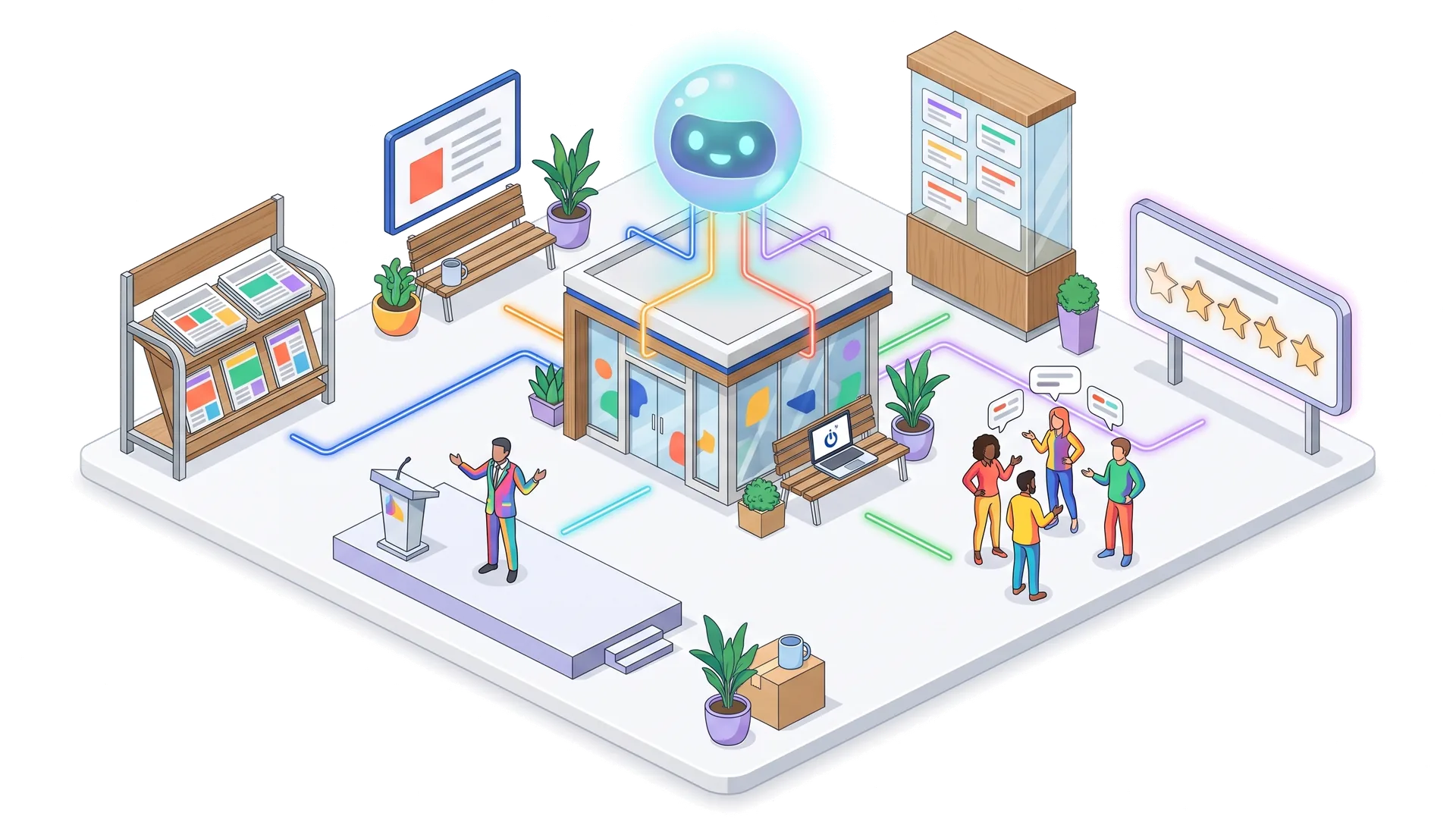
- Customer reviews: Request detailed reviews on Google, industry platforms, and, in B2B, on vendor comparison sites.
- Directories and trade associations: A consistent presence strengthens your entity.
- Media and partners: An interview, guest post, or case study published by a third party is worth more than just another article on your blog.
- LinkedIn: A complete company page and posts from team experts on your topics.
This work ties into brand awareness and PR. It takes time, but it also benefits your Google rankings and your image with customers.
The Case of Local Businesses
For a local query (“plumber in Chicago”, “web agency in London”, “lawyer in New York”), assistants cross-reference business profiles, reviews, local directories, and website pages. A complete Google Business Profile, recent reviews describing the service provided, and a dedicated page for each service area make a real difference. Ensure the company name, address, and phone number are written exactly the same way everywhere, including on social media and your country’s professional directories.
Generative Engine Optimization vs. Google SEO: What Really Changes
AI search optimization does not replace traditional SEO: it builds on it. The differences lie in how visibility is achieved and measured.
| Criteria | Traditional Google SEO | Visibility in answer engines |
|---|---|---|
| Result | A position in a list of links | A mention or citation in a written answer |
| Index used | Google for Gemini, Bing and proprietary bots for ChatGPT and Copilot | |
| Content unit | The page | The passage that answers the question |
| Strong signals | Relevance, links, page experience | Entity clarity, verifiable facts, third-party mentions, freshness |
| Measurement | Positions, clicks, impressions | Question testing, visits from assistants, brand mentions |
An Ahrefs study shared by Le Blog du Dirigeant indicates that only 37 to 38% of sources cited in AI Overviews come from Google’s top 10: ranking first does not guarantee being cited, and a lower-ranked site might be if it answers the question better.
Measuring Your Visibility in ChatGPT and Gemini
There is no Search Console equivalent for ChatGPT yet. However, a few simple methods give a good idea of where you stand.
- Test your key questions: List about ten questions your customers ask (“best provider of… in…”, “how much does… cost”) and ask them monthly to ChatGPT, Gemini, and Perplexity, noting if you are mentioned, cited, and with what information.
- Track visits: In Google Analytics 4, visits from chatgpt.com, perplexity.ai, gemini.google.com, or copilot.microsoft.com appear in referral traffic sources. Create an “AI Assistants” channel group to track them.
- Check Search Console: Traffic from AI Overviews and Google’s AI mode is included in the Performance report, under the “Web” search type.
- Monitor mentions: Brand monitoring tools, and now specialized AI visibility tools, track how often your brand appears in answers.
Which Questions to Test?
Choose varied questions reflecting your customers’ different decision stages. A discovery question (“how to choose a provider for…”), a comparison question (“X or Y for…”), a local question (“best… in…”), a pricing question (“how much does… cost”), and a brand question (“what do you think of…”). Ask them in a fresh conversation, ideally logged out, and note the cited sources: they show you which sites it would be useful to be featured on.
An incorrect answer about your business is valuable information: it shows what your site or profiles leave ambiguous. Correct the source rather than trying to “correct” the assistant.
Self-Diagnostic: Is Your Site Ready for Answer Engines?
Check the boxes for what is already in place on your site. The score gives an initial indication; it does not replace a full analysis.
Common Myths About Ranking in ChatGPT
“Just add an llms.txt file”
The llms.txt file, a plain-text site summary for language models, is a proposed format, not a standard recognized by major engines. Google does not mention it in its AI feature guidelines. Adding it does not hurt, but it will not make up for a blocked bot or vague content.
“Blocking GPTBot removes me from ChatGPT”
No. GPTBot is used for model training; OAI-SearchBot determines your presence in ChatGPT search answers. You can protect your texts from training while remaining visible.
“You can pay to be recommended by ChatGPT”
OpenAI announced the arrival of ads in ChatGPT, displayed separately from answers. The recommendations themselves cannot be bought: they depend on the sources the assistant deems relevant. Beware of offers promising a guaranteed spot in answers.
“Traditional SEO is useless now”
It is the opposite. Gemini and AI Overviews rely on the Google index, ChatGPT on search indexes: a poorly indexed, slow, or badly structured site remains invisible everywhere. AI search optimization extends SEO; it does not replace it.
The Limits of Optimizing for Assistants
No one controls an assistant’s answers. They vary based on how the question is phrased, the user’s history, their location, and the model version. Two people might get different recommendations for the same question. Models also make mistakes: outdated information, confusing two similarly named companies, inventing numbers.
What if an Assistant Gets Your Business Wrong?
An old address, a service you no longer offer, a competitor confused with you: these errors almost always stem from an online source. Find where the information comes from (an old directory listing, a dated news article, a forgotten page on your site), correct it or request an update, then verify that your About page and structured data provide the right version. ChatGPT and Gemini also offer a button to report inaccurate answers: use it, but do not expect miracles. Lasting correction comes from the sources the assistants read.
You must therefore think in terms of probability: every improvement increases your chances of being cited, but none guarantees it. Our advice: never sacrifice readability for your customers in favor of supposed optimization for machines. A page that is clear and useful to a human is, almost always, the best page for an assistant.
Conclusion
Generative engine optimization for ChatGPT and Gemini rests on simple foundations: allowed bots, a site indexed by Bing and Google, a clearly and consistently described business, pages that answer directly with verifiable facts, and a presence outside your own site. There is no magic, just consistent work that also benefits your traditional SEO. If you need expert guidance, our SEO services can help you implement these strategies.
Start with the self-diagnostic above, fix access and indexing, then work on your key pages one by one. To go further on using AI in your business, read our article on ways to integrate artificial intelligence. And if multiple teams write your content using AI, our guide on editorial guidelines and brand voice will help you maintain consistent messaging, which assistants also reward.
Frequently Asked Questions About ChatGPT Visibility
How to rank in ChatGPT?
Allow the OAI-SearchBot in your robots.txt and firewall, get your site indexed by Bing using Bing Webmaster Tools, clearly describe your business and services, and publish pages that directly answer your customers’ questions with verifiable facts. Brand mentions on other sites will further boost your chances of being cited.
What is the difference between SEO and GEO?
SEO aims for a ranking position in search engine results. GEO, or generative engine optimization, aims for a mention or citation in the written answer provided by an assistant like ChatGPT or Gemini. GEO builds on SEO fundamentals (indexing, structure, quality) and adds entity clarity, citable content, and off-site presence.
Does ChatGPT use Google or Bing?
ChatGPT uses its own search bot, OAI-SearchBot, and third-party search providers, including Bing. A Seer Interactive study showed that a large majority of its citations matched top Bing results. Gemini, on the other hand, relies on the Google index: you must therefore optimize for both.
Should I block GPTBot?
It is an editorial choice. Blocking GPTBot prevents OpenAI from using your content to train its models, without removing you from ChatGPT search answers, which depend on OAI-SearchBot. Many sites allow OAI-SearchBot and block GPTBot, protecting their texts while remaining visible.
How long does it take to appear in ChatGPT answers?
Technical fixes (bots, Bing indexing) can show results in a few weeks, once the pages are crawled. Building brand awareness and external mentions takes several months. Assistant answers vary based on the question and the user: you must measure regularly, not just once.
How do I know if ChatGPT is sending me visitors?
In Google Analytics 4, check your referral traffic sources: visits from chatgpt.com, perplexity.ai, gemini.google.com, or copilot.microsoft.com will appear there. Create a custom channel group for AI assistants to track their growth month over month, and regularly test your key questions directly in the assistants.
Our Sources
- OpenAI, Overview of OpenAI Crawlers (OAI-SearchBot, GPTBot, ChatGPT-User)
- Google Search Central, AI features and your website
- Cloudflare, default blocking of AI bots (July 1, 2025)
- Search Engine Land, Inside ChatGPT search
- Omni Online Strategies, How ChatGPT decides which sources to cite (Seer Interactive study)
- Digidop, Demandbase data on traffic sent by ChatGPT (August 2026)
- Clickforest, Profound analysis of assistant citations
- Le Blog du Dirigeant, brand recommended by AI engines