Ecommerce fraud prevention: stop fraudulent orders without blocking good customers
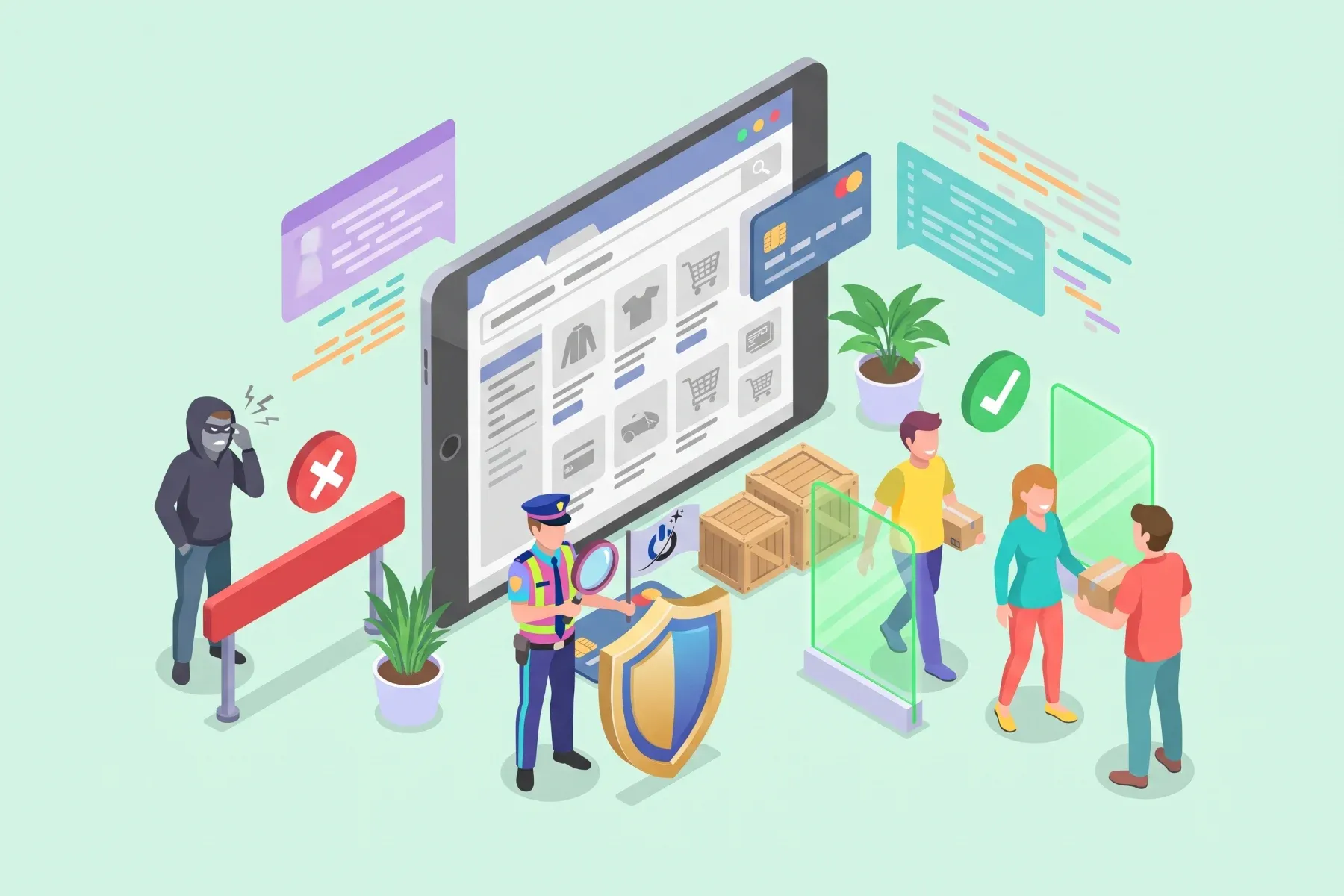
Ecommerce fraud is expensive, but fighting it too hard is expensive too. Every good customer blocked by mistake is a lost sale and often a customer who never comes back. Effective fraud prevention is about finding the balance between security and a smooth checkout.
This guide covers the signs of a suspicious order, the controls to put in place in the right order (simple rules, risk-based 3D Secure, manual review), how to handle a chargeback, how to stop card-testing bots, privacy obligations and the metrics to track. A risk score calculator helps you decide how to handle an order.
At a glance
- Ecommerce fraud mainly takes three forms: payment with a stolen card, card testing by bots, and friendly fraud (a real customer who disputes a purchase).
- Good fraud detection starts with simple signals: mismatched addresses, unusual carts, brand-new accounts and repeated payment attempts.
- Strong customer authentication (3D Secure) has sharply reduced online card fraud in Europe; used based on risk, it protects you without slowing every customer down.
- Keep manual review for gray-zone orders and automatic declines for obvious cases: too many false positives cost more than fraud.
- Data collected to fight fraud should be limited, kept for a short time and disclosed in your privacy policy.
What is ecommerce fraud?
Ecommerce fraud is any online order obtained fraudulently at the expense of the merchant or of the owner of a payment method. It usually ends in a chargeback: the cardholder’s bank refunds its customer and pulls the money back from the merchant, who has already shipped the goods.
There are three main families:
- Stolen card fraud. A fraudster uses card data obtained through phishing or a data breach to buy products that are easy to resell.
- Card testing (carding). Bots try hundreds of small payments to find out which stolen cards still work. Even when declined, these attempts cost fees and can get your payment account suspended.
- Friendly fraud. A real customer receives the order, then disputes it with their bank, claiming it never arrived or that they never placed it.
Add to these refund fraud (returning an empty box, abusing return policies) and account takeover with stolen passwords.
Does strong authentication actually work?
Europe offers a large-scale test. Since the PSD2 directive made strong customer authentication the default for online card payments, the French payment security observatory chaired by the Banque de France has credited it with a 38% drop in the online card fraud rate between 2018 and 2023. In the first half of 2025, the overall card fraud rate in France fell below 0.05% of transaction value for the first time.
The flip side: fraud moves to wherever protection is weakest, mainly remote payments processed without strong authentication. The same observatory launched a dedicated plan in 2024 to reduce them. In the United States, 3D Secure is not mandatory, which means more of your orders go through with no authentication at all. For a US merchant, the lesson is simple: authentication, applied where the risk is, is one of the most effective tools you have.
Signs of a suspicious order
Before installing tools, learn to recognize risky behavior. No single signal is proof on its own; it is the combination that should raise a flag.
| Signal | Risk level | What to do |
|---|---|---|
| Several declined payments, then one approved | High | Put on hold, verify before shipping |
| Shipping to a package forwarding service | High | Manual review or mandatory 3D Secure |
| Card country, IP location and shipping country all different | High | Strong authentication, review if the amount is high |
| Several units of an expensive, easy-to-resell product | Medium | Cap quantities, check new accounts |
| Account created right before purchase, cart far above average | Medium | Hold threshold for new accounts |
| Always the fastest shipping on a large order | Medium | Combine with other signals |
| Disposable email or email that does not match the name | Medium | Ask for email confirmation |
| Different billing and shipping addresses, same country | Low | Often a gift: no action on its own |
Address and location mismatches
Compare the billing address, the shipping address, the card’s country and the approximate location of the IP address. A card issued abroad, a connection from a third country and delivery to a package forwarding service add up to a pattern. A customer sending a gift to a relative, on the other hand, is nothing unusual.
Unusual carts and shipping
Fraudsters try to cash out a card before it gets blocked: several units of the same expensive, easy-to-resell product, an amount far above your average order value, the fastest shipping regardless of cost. These signals weigh more when the account was just created.
Repeated payment attempts
Several declined payments followed by an approved one, on the same account or from the same IP address, often mean a fraudster is working through a batch of cards until one works. Dozens of small payments in a few minutes point to a card-testing bot.
Browsing behavior
Real customers take time to browse, compare and fill in their details. A bot lands directly on checkout, fills every field in a fraction of a second and submits. The time between arrival and payment, and the number of pages viewed, are good indicators.
Controls to put in place, from simple to advanced
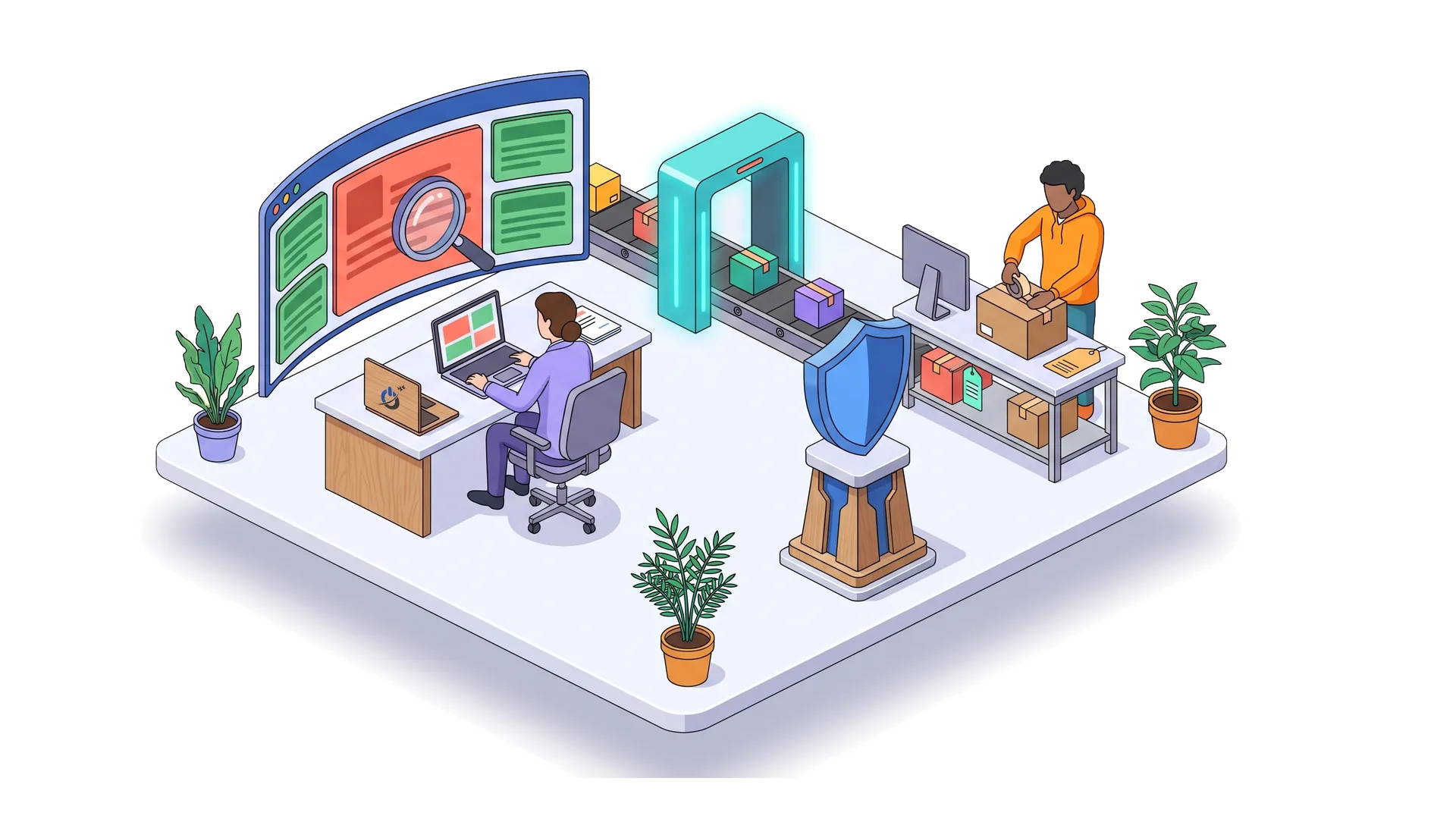
Effective prevention is layered: each level handles what the previous one lets through, without slowing down most honest customers.
Level 1: your payment processor’s protections
Stripe, PayPal, Square, Adyen and Shopify Payments already include risk analysis tools. Turn them on and tune them: CVV and address verification (AVS), blocking countries you do not ship to, limits on payment attempts. It is free or cheap, and it is your first barrier.
Level 2: risk-based 3D Secure
3D Secure (version 2) asks customers to confirm the payment with their bank, usually in their banking app or with a one-time code. It is optional in the United States, but most processors let you trigger it on risky orders. Its main benefit for merchants: when a fraudulent payment was successfully authenticated, liability for the fraud generally shifts to the card issuer.
The most common setup is to let your processor request authentication when the risk is high and skip it for small carts from known customers. You protect risky orders without adding a step for everyone.
Level 3: rules tailored to your store
Add a few rules specific to your business: hold orders above a certain amount from new accounts, check known forwarding addresses, cap the number of units of a sensitive product, block disposable email domains on large orders. Review them every quarter, because a rule that is too strict blocks good customers.
Level 4: manual review for the gray zone
Orders that are neither clearly good nor clearly fraudulent deserve a human check before shipping: look the customer up, send a friendly call or email to confirm the order, ask for verification on high amounts. Keep the tone courteous: an honest customer who feels suspected will not come back.
Level 5: specialized tools
Above a certain volume, dedicated fraud prevention platforms analyze hundreds of signals (device, behavior, history shared across merchants) and score each order. Some even guarantee chargeback reimbursement on the orders they approve. They make sense when fraud or manual review really weighs on your costs.
Is your store getting waves of suspicious payments? Explore our website security services
Calculate an order’s risk score
The calculator below mimics a simple risk analysis: each signal adds points and the total suggests how to handle the order. It does not replace your processor’s tool, but it helps you put your rules into words.
Stop card-testing bots
Card testing shows up as a burst of small payments, often on the same cheap product, with different cards and inconsistent details. Act fast: fees pile up and your processor may suspend your account.
- Limit payment attempts per session, per IP address and per account.
- Add an invisible bot check (Cloudflare Turnstile, reCAPTCHA) on checkout and account creation.
- Filter automated traffic upstream with a web application firewall and rate limiting.
- Set a minimum order amount or temporarily hide the targeted product during the attack.
- Alert your payment processor: it can block the tested cards and help you.
The same bots often create fake customer accounts in bulk. A website security analysis shows where your store is exposed.
Handle chargebacks
A chargeback is not necessarily lost. You can dispute it with evidence: successful 3D Secure authentication, proof of delivery with signature or tracking, communication with the customer, IP address and account history, accepted terms of sale. Respond within the deadline set by your processor, which is often short.
To reduce friendly fraud, make it easy to reach you before a dispute: a recognizable business name on the card statement, a visible customer service address, quick replies and a clear return policy. Many customers dispute a charge simply because they do not recognize the descriptor.
Watch your chargeback rate too. Above the thresholds set by card networks and processors, your account can be placed in a monitoring program, with extra fees, or even closed.
False positives: the hidden cost of strict security
A false positive is a legitimate order blocked by mistake. It costs the sale, what you spent to acquire the customer and often their loyalty. A store that automatically declines every international order or every large cart can lose far more in sales than it would have lost to fraud.
To limit false positives: hold and verify rather than decline automatically, request authentication rather than cancel, treat loyal customers differently, and regularly analyze declined orders to adjust your rules.
Privacy and fraud prevention
Fraud prevention is a legitimate reason to process data, but it is still regulated. State privacy laws such as the California Consumer Privacy Act allow data use for security and fraud prevention, while still requiring transparency. Collect only what you need (IP address, device, order history), keep it for a limited time, describe this processing in your privacy policy and give customers a way to reach a human when an automated decision blocks them. Card numbers should never pass through your own site: let your PCI DSS certified payment processor handle them.
Metrics to track
| Metric | What it measures |
|---|---|
| Chargeback rate | Share of disputed orders (watch it against your processor and card network thresholds) |
| Fraud losses | Lost goods, amounts and fees |
| False positive rate | Share of blocked orders that were legitimate |
| Manual review rate | Workload and how relevant your rules are |
| 3D Secure success rate | Friction added at checkout |
| Chargebacks won | Quality of the evidence you keep |
The bottom line
Preventing ecommerce fraud without blocking good customers takes a layered approach: turn on your payment processor’s protections, use 3D Secure based on risk, add a few store-specific rules, keep manual review for gray-zone orders and protect checkout from card-testing bots. Keep evidence to dispute chargebacks, limit the data you collect and track false positives as closely as fraud. Good security is the kind your honest customers never notice.
Frequently asked questions about ecommerce fraud
How do you detect a fraudulent order in an online store?
A fraudulent order stands out through a combination of signals: a shipping address in a different country from the card, a package forwarding service, an account created just before purchase, several units of an expensive product, express shipping every time, and declined payments right before an approved one. No signal is proof on its own; the combination justifies a check before shipping.
Is 3D Secure required for US online stores?
No. In the United States, 3D Secure is optional, unlike in Europe, where PSD2 makes strong customer authentication the default for online card payments. US merchants can still trigger it on risky orders through their payment processor. When a payment is successfully authenticated, liability for fraud generally shifts to the card issuer.
What is a chargeback?
A chargeback is a forced reversal of a card payment, requested by the cardholder through their bank, for example because of fraud or an item that never arrived. The amount is taken back from the merchant, often with a fee. The merchant can dispute it with evidence: successful authentication, proof of delivery, customer communication and accepted terms of sale.
How do I stop card testing on my website?
Limit payment attempts per session, IP address and account, add a bot check on checkout and account creation, filter automated traffic with a web application firewall and alert your payment processor. During an attack, hiding the targeted product or setting a minimum order amount often shuts the testing down.
Should I block international orders to prevent fraud?
Usually not, if you sell internationally, because you would lose honest customers. Handle those orders with more care instead: 3D Secure authentication, address consistency checks and manual review above a certain amount. Blocking a country only makes sense if you do not ship there or you see repeated fraud from it.
What data can I collect to fight fraud?
You can collect the data needed for risk analysis: IP address, device information, order and payment history, address consistency. It should be limited to that purpose, kept for a defined period and disclosed in your privacy policy. Card data should be handled only by your payment processor.